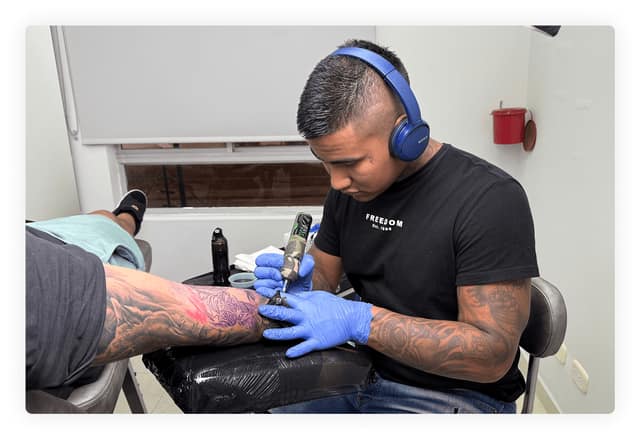
The history of tattoos in Colombia runs from indigenous body markings that expressed identity, protection and belonging, through an urban period marked by stigma, to today's scene: visually trained artists who master realism, blackwork and color and have turned cities like Cali into an international destination.
Tattoo art in Colombia is much more than a contemporary aesthetic trend: it’s a cultural journey that connects ancestral roots with modern techniques. Understanding this history helps you value tattooing as a visual language with its own identity.
1. Origins: marks, symbols, and tradition
Across different indigenous communities, body marks have served social and symbolic roles: identity, protection, belonging, ritual, and memory.
2. Urban evolution and stigma
For many years, tattooing was associated with subcultures and stigma. Over time, cultural change helped it become widely recognized as a legitimate form of artistic expression.
3. The contemporary scene: technique and style
Today Colombia has artists with strong visual training and technical mastery. Global influences blend with local references, creating unique styles.
- High-detail realism.
- Ornamental and blackwork.
- Vibrant color and neo-traditional.
- Fine line and minimalism, with a focus on longevity.
Tattooing is personal history, but also cultural history—written on the skin.