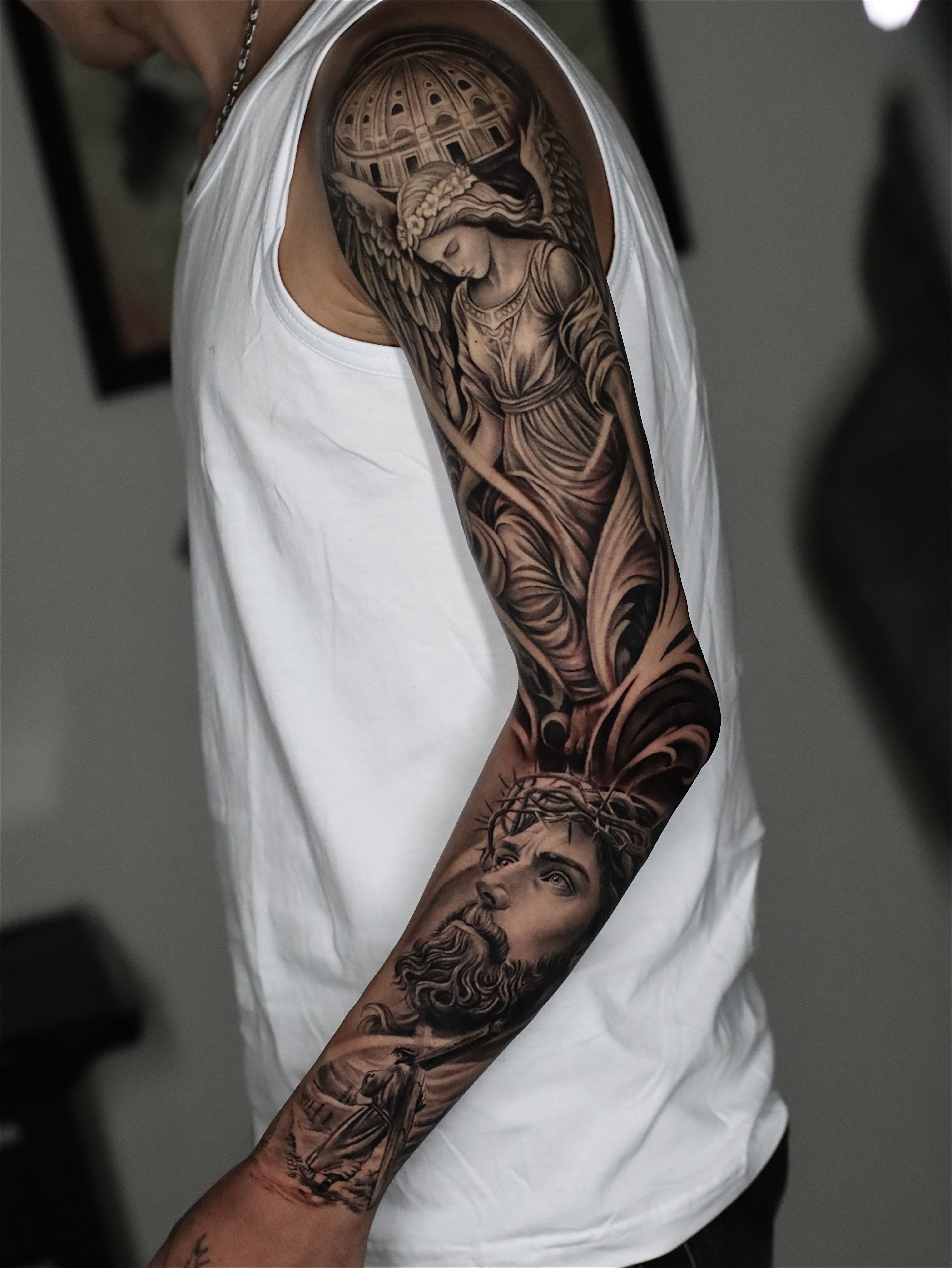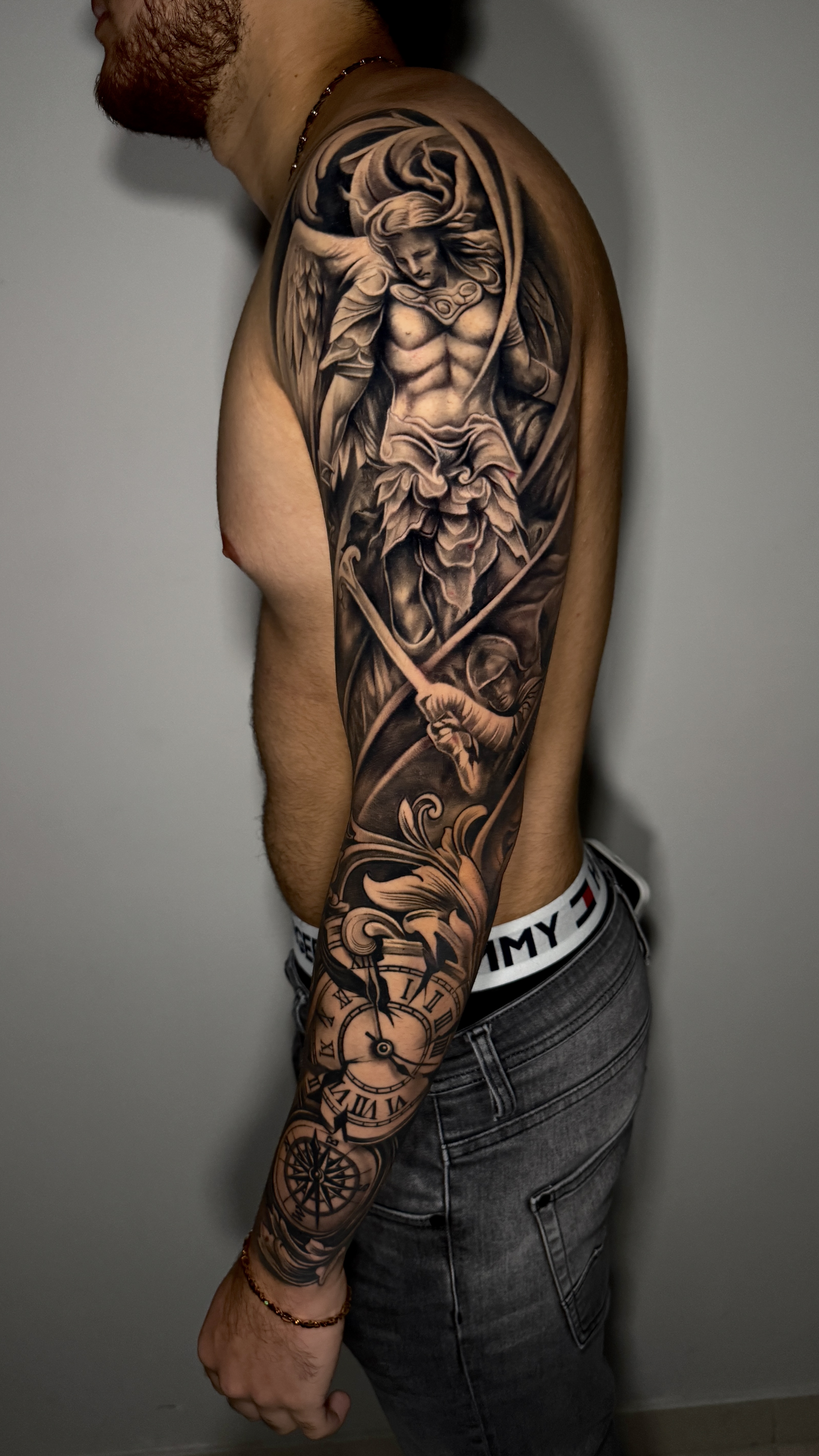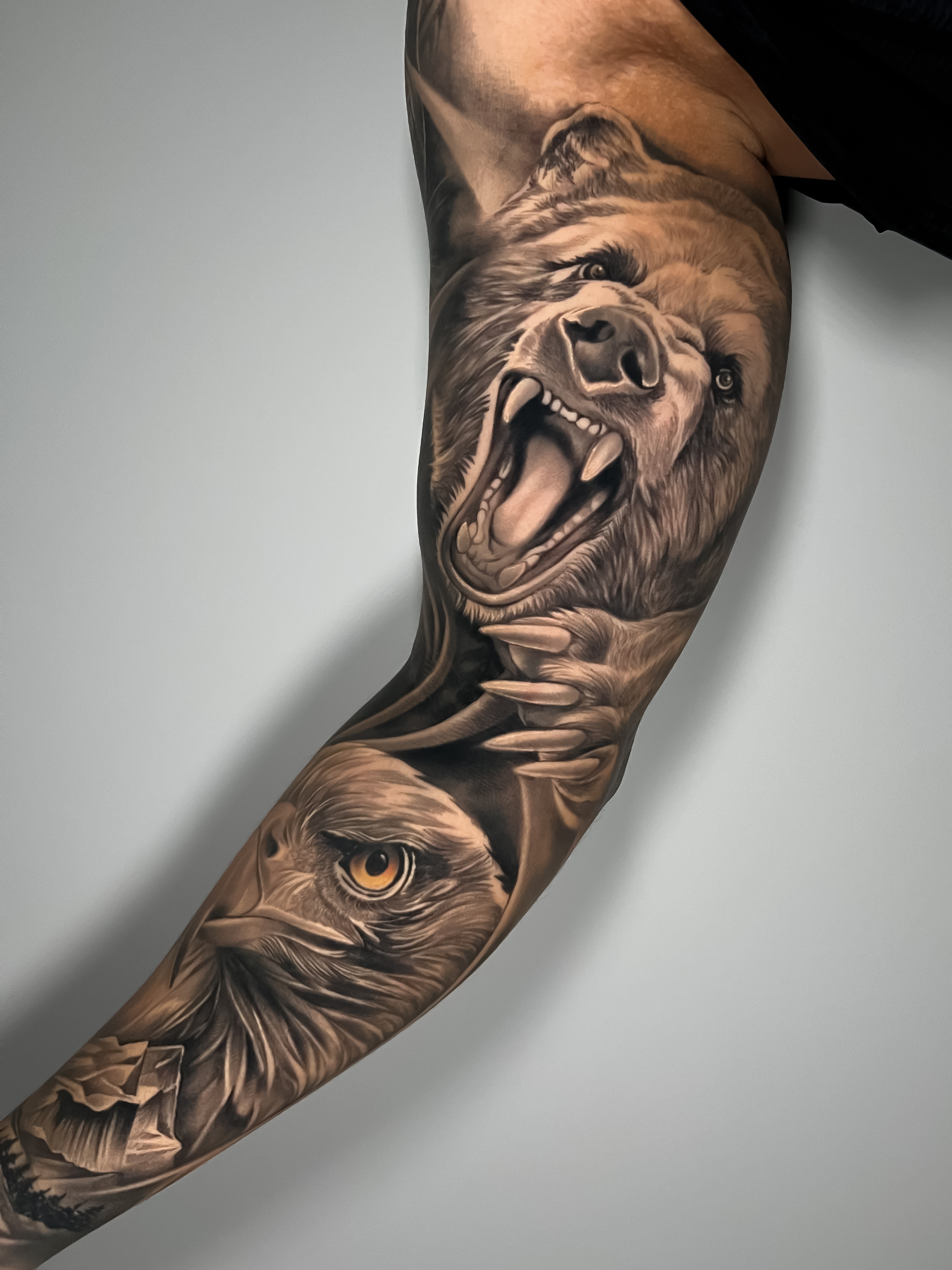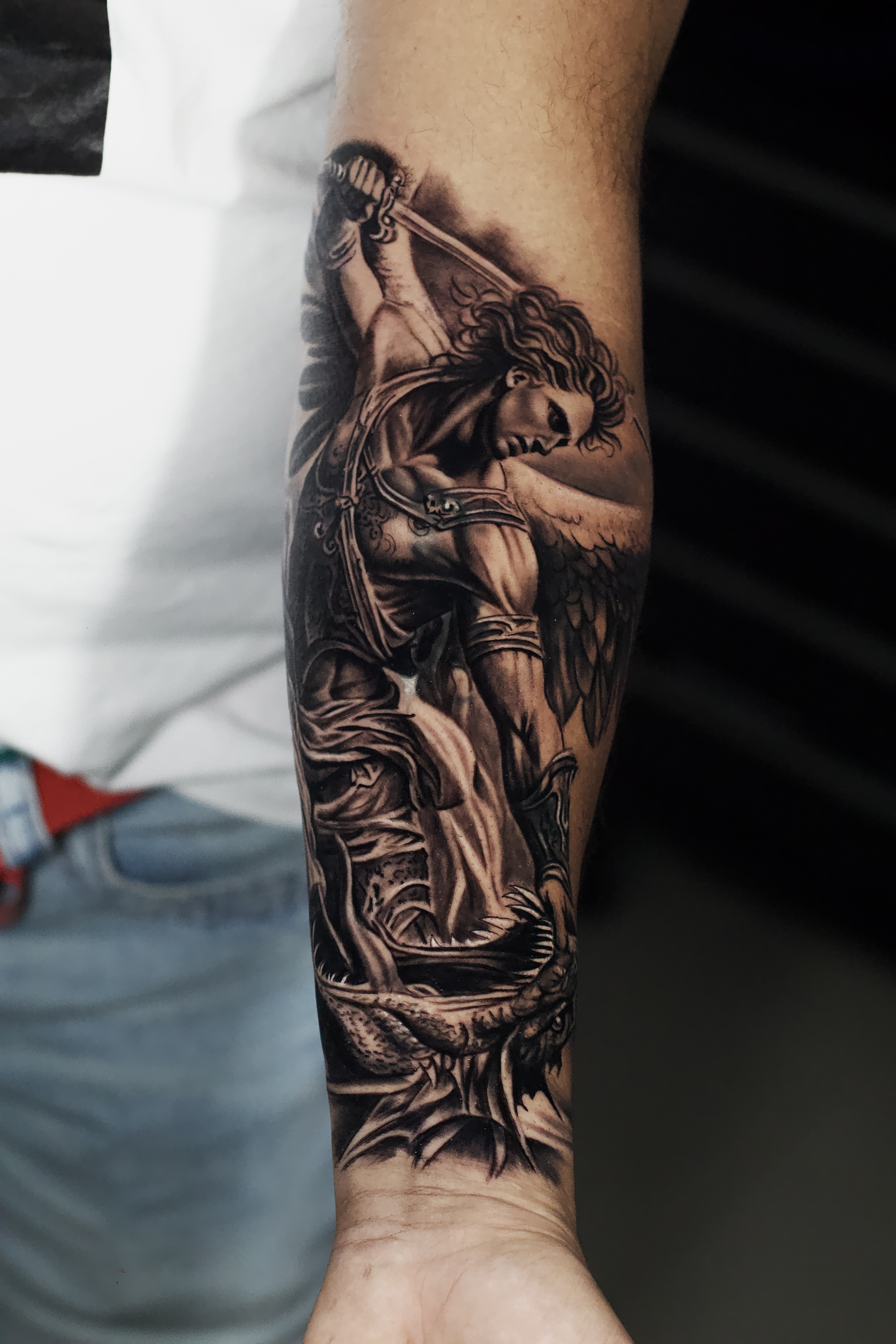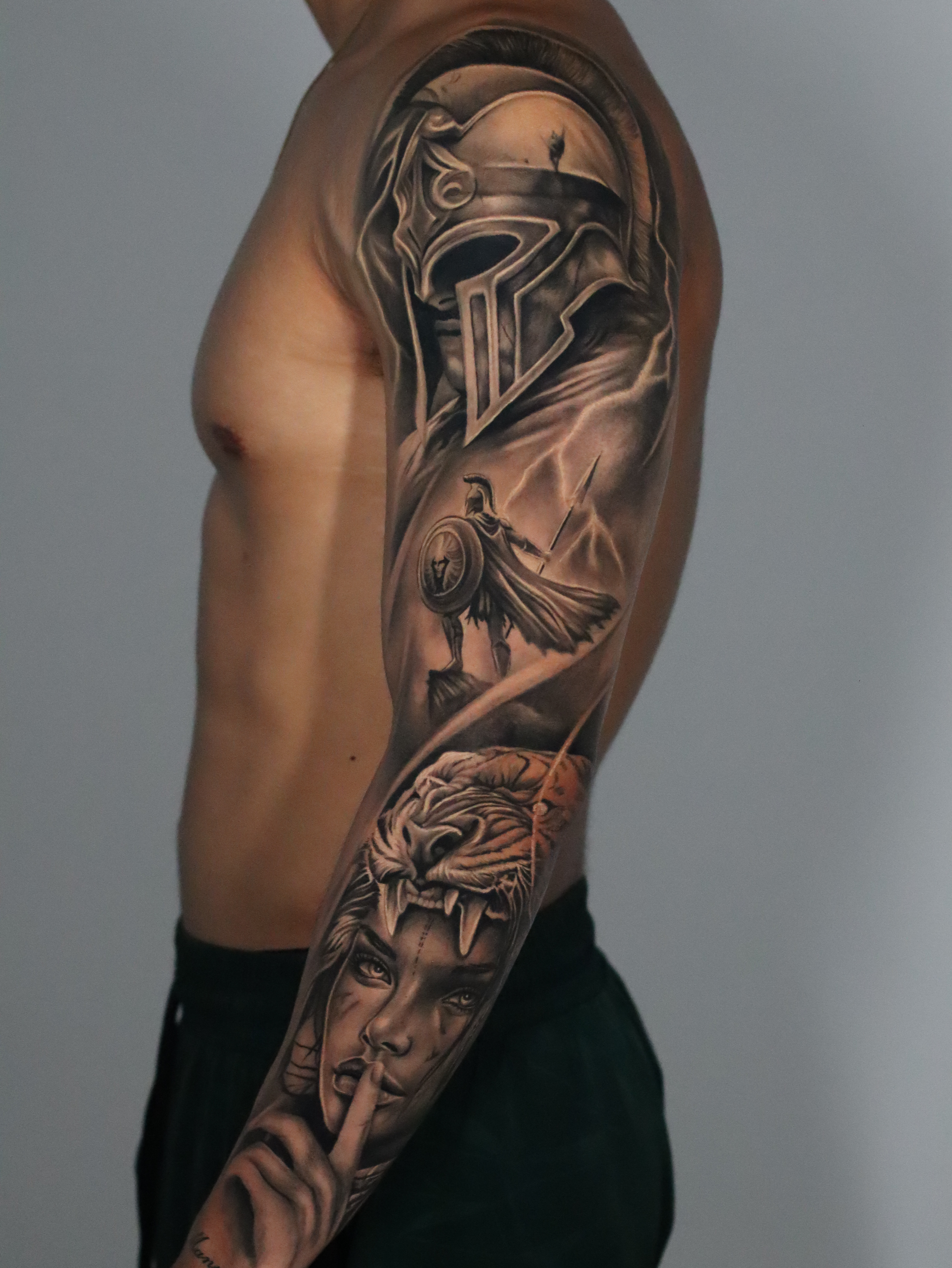
Approaching a large-scale tattoo project, such as a full sleeve, leg, or full back piece, is radically different from a micro-tattoo. Sessions lasting more than four or five hours demand considerable physical and mental endurance. Understanding how your body responds to sustained trauma is crucial for optimizing the experience.
The physiology of pain and fatigue
When the needle repeatedly penetrates the dermis, the sympathetic nervous system activates, triggering a "fight or flight" response. This causes a sustained release of adrenaline and endorphins. However, after a few hours, endorphin reserves deplete, and glucose levels drop—a phenomenon colloquially known as "hitting the wall" or an adrenaline crash. To prevent this, prior preparation is non-negotiable.
Nutrition and hydration: Building reserves
- Tissue hydration: Well-hydrated skin absorbs ink more easily and swells less. Start drinking 2 to 3 liters of water daily at least three days before the session.
- Glycogen loading: The night before, eat a meal rich in complex carbohydrates (whole wheat pasta, rice, potatoes). On the day of the appointment, a heavy breakfast rich in protein and carbs will stabilize your blood sugar levels, significantly delaying fatigue.
- Zero alcohol and blood thinners: Consuming alcohol, ibuprofen, or aspirin in the 24-48 hours prior thins the blood. Excessive bleeding not only impairs the artist's vision and work but can also "wash out" the ink, resulting in a dull, undersaturated healed tattoo.
Skin condition and topical care
Do not make dramatic alterations to your skin right before the appointment. Sunburns, even mild ones, will force a cancellation, as tattooing UV-damaged skin will cause severe dermal damage and possible pigment rejection. Avoid aggressive exfoliation on the same day; instead, moisturize the skin with fragrance-free creams during the prior week, but arrive at the appointment with completely clean skin, free of lotions or oils.
Mental preparation and distractions
Accepting and processing discomfort is an integral part of the process. Bringing noise-canceling headphones, a downloaded movie on a device, or long-form podcasts will help dissociate your mind from the physical stimulus. The body tends to tense up under pain, which exhausts muscles quickly; mental distraction facilitates deep breathing and keeps muscles relaxed, allowing the needle to work on a docile canvas.