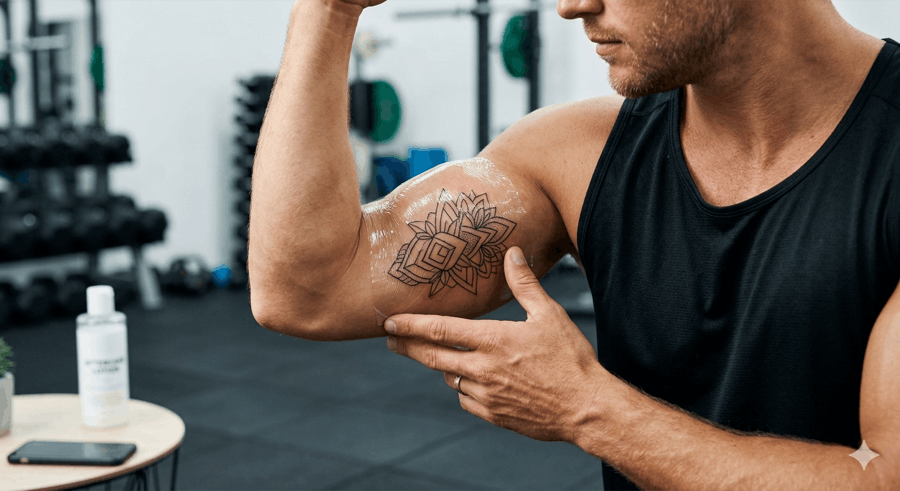
A new tattoo isn’t just “fresh ink”—it’s a healing wound. And the gym is where that wound meets three classic enemies: friction, sweat, and contact with surfaces. If you train like nothing happened, you don’t just raise irritation and infection risk—you can also compromise sharpness and color.
The good news is that many people can stay active if they’re strategic. The key is adjusting intensity, choosing movements that don’t stretch the area, and returning progressively based on size and placement.
Why stretching and rubbing matter in the first days
In the first healing phase, your skin is closing and forming a protective layer. If you repeatedly stretch the tattooed area to end range, you can create micro-cracks or increase inflammation. That often shows up as itch, redness, and thicker scabbing.
Friction matters just as much: tight clothing, elastic bands, or machines rubbing the area can abrade fresh skin. The result is irritation, poorly formed scabs, or superficial ink loss during peeling.
Sweat changes the local environment too: humidity + heat + friction can promote irritation or folliculitis, especially if you can’t wash the area soon after training.
How to decide when to return (no magic number)
There’s no universal day count. It depends on size, saturation, and your skin. A tiny tattoo on the outer forearm isn’t the same as a dense thigh piece. What matters are signs: significant pain, heat, strong redness, active scabbing, or oozing means it’s not time.
If the tattoo is in heavy peeling, training can be uncomfortable and increases the urge to scratch or rub. During that phase, if you work out at all, do it carefully and avoid any direct friction.
A sensible approach is to train body areas that don’t force movement or stretching of the tattooed zone, and keep the tattooed area out of extreme ranges for the first days.
Exercises to avoid depending on placement
The practical rule is to avoid movements that repeatedly push the tattooed skin into maximum stretch. A tattoo in the elbow crease doesn’t love heavy curls and extensions. Rib tattoos don’t love deep twisting and forced breathing drills. Inner thigh tattoos don’t love deep squats or adductor machines early on.
If the tattoo sits on a contact/support area (upper back during bench press, for example), sweat and bench contact can irritate. In that case, modify the exercise or protect with appropriate clothing—without over-occluding the skin.
- Adjustments that usually help:
- Prioritize light cardio and friction-free strength work early on.
- Avoid end-range movements that directly stretch the tattooed skin.
- Wear loose, breathable clothing; avoid compression over the tattoo.
- Clean equipment and avoid placing the tattoo directly on shared surfaces.
Hygiene: the most underestimated factor
Gyms are not sterile environments. Bacteria live on bars, benches, mats, and hands. With intact skin, it’s usually fine. With a fresh tattoo, it’s a different story. If you train, your hygiene standards must go up.
Bring a clean towel, disinfect surfaces, avoid touching the tattoo with dirty hands, and shower as soon as you can after training. If you can’t shower, at least clean the area properly when you get home following studio instructions.
Skip pools, hot tubs, and saunas early on—not only because of water, but also because prolonged heat and humidity can macerate healing skin.
How to return without losing progress
Many people worry that pausing for a few days will destroy progress. In reality, a short break or a week of modified training usually has minimal fitness cost compared to the cost of poor healing (touch-ups, patchiness, chronic irritation).
Think of healing as a 2–4 week skin project. With smart planning, you can stay active with adjusted routines and return to full intensity once the skin is stable.
If you want, tell us your tattoo placement, size, and training routine. We can suggest a phased return plan so you can work out without stretching the tattooed skin or compromising results.


