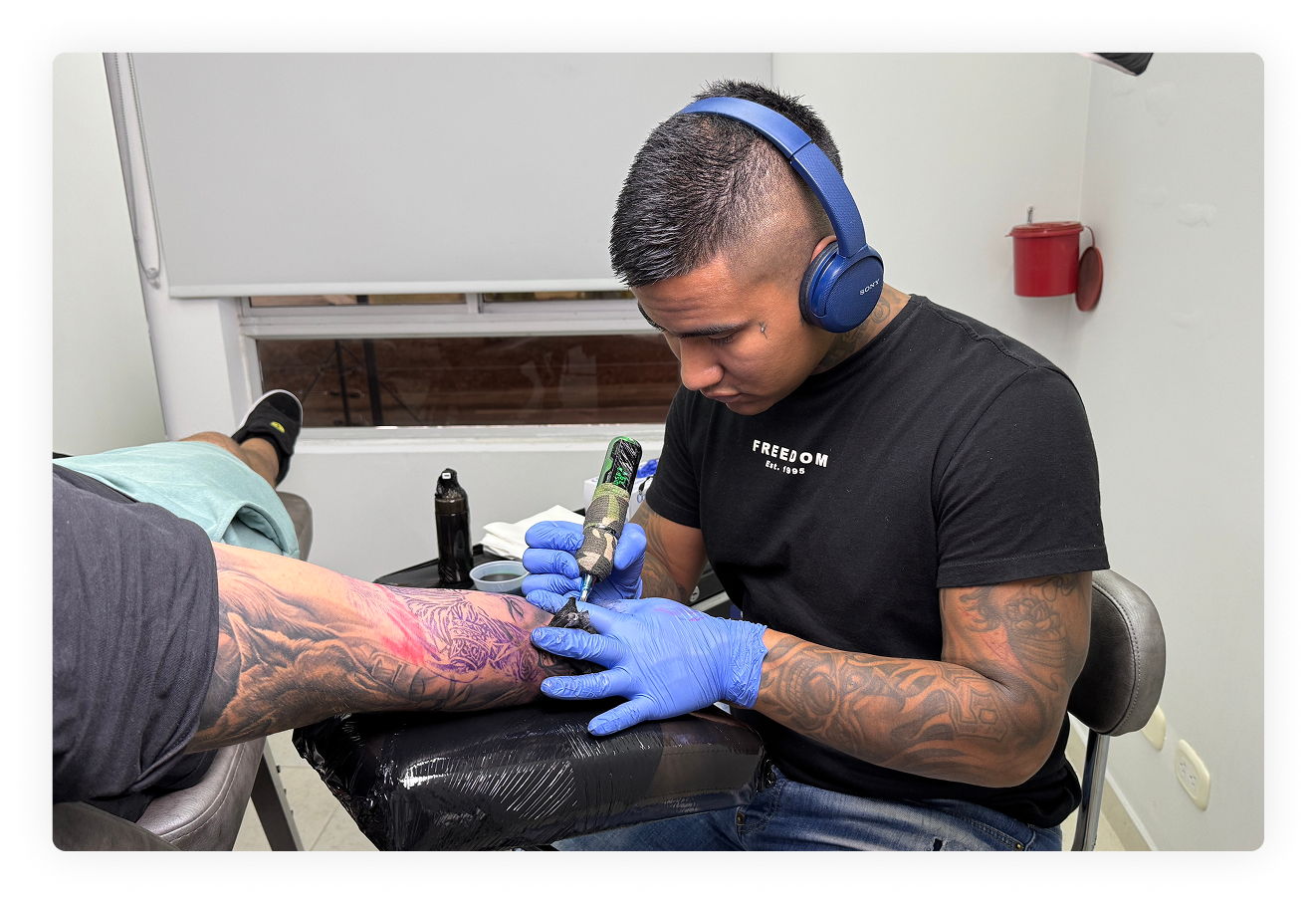
Getting tattooed with dermatitis or psoriasis can be safe if the condition is under control, you avoid active flares and plaques, and you coordinate with your dermatologist first. The main psoriasis risk is the Koebner phenomenon: needle trauma triggering new lesions. Start with a small piece and be extra careful with aftercare.
If you live with dermatitis, psoriasis, or another inflammatory skin condition, it’s natural to have questions about getting tattooed. On one hand, there’s the desire to reclaim your body as a canvas; on the other, the concern that a tattoo might trigger flares or create new lesions.
The honest answer is that there’s no universal "yes" or "no". Some people with these conditions get tattooed without issues; others have skin that reacts in unpredictable ways. That’s why the ideal decision is made between three people: you, your dermatologist, and your tattoo artist.
Psoriasis, dermatitis and the Koebner phenomenon
Certain skin diseases, like psoriasis, can display what’s known as the Koebner phenomenon: new lesions appearing in areas where the skin experiences trauma—like a cut, burn, or, in this case, a tattoo.
That doesn’t mean every tattoo will cause a plaque of psoriasis, but it does mean there’s a risk that varies from person to person depending on how active the disease is, what treatment you’re on, and how your skin reacts to mechanical injury.
With atopic dermatitis, skin is often more sensitive, dry, and prone to itching. A poorly cared-for tattoo or one placed over active flares can become more irritated, take longer to heal, or tempt you to scratch in ways that affect both the design and your comfort.
Why coordination with your dermatologist is key
Before deciding, it’s highly recommended to talk to the specialist who manages your condition. They know your history, triggers, how often you flare, and what medications you’re using, including immunosuppressants or biologics.
Your dermatologist can suggest lower-risk timing (periods when your disease is calmer), areas that might be safer to avoid, and extra precautions. They can also help document how your skin looks before and after, so you can both assess whether the tattoo affects disease behavior.
For the studio, getting a note or recommendations from your dermatologist is incredibly helpful. It allows them to adapt design, size, and placement to your clinical reality instead of guessing.