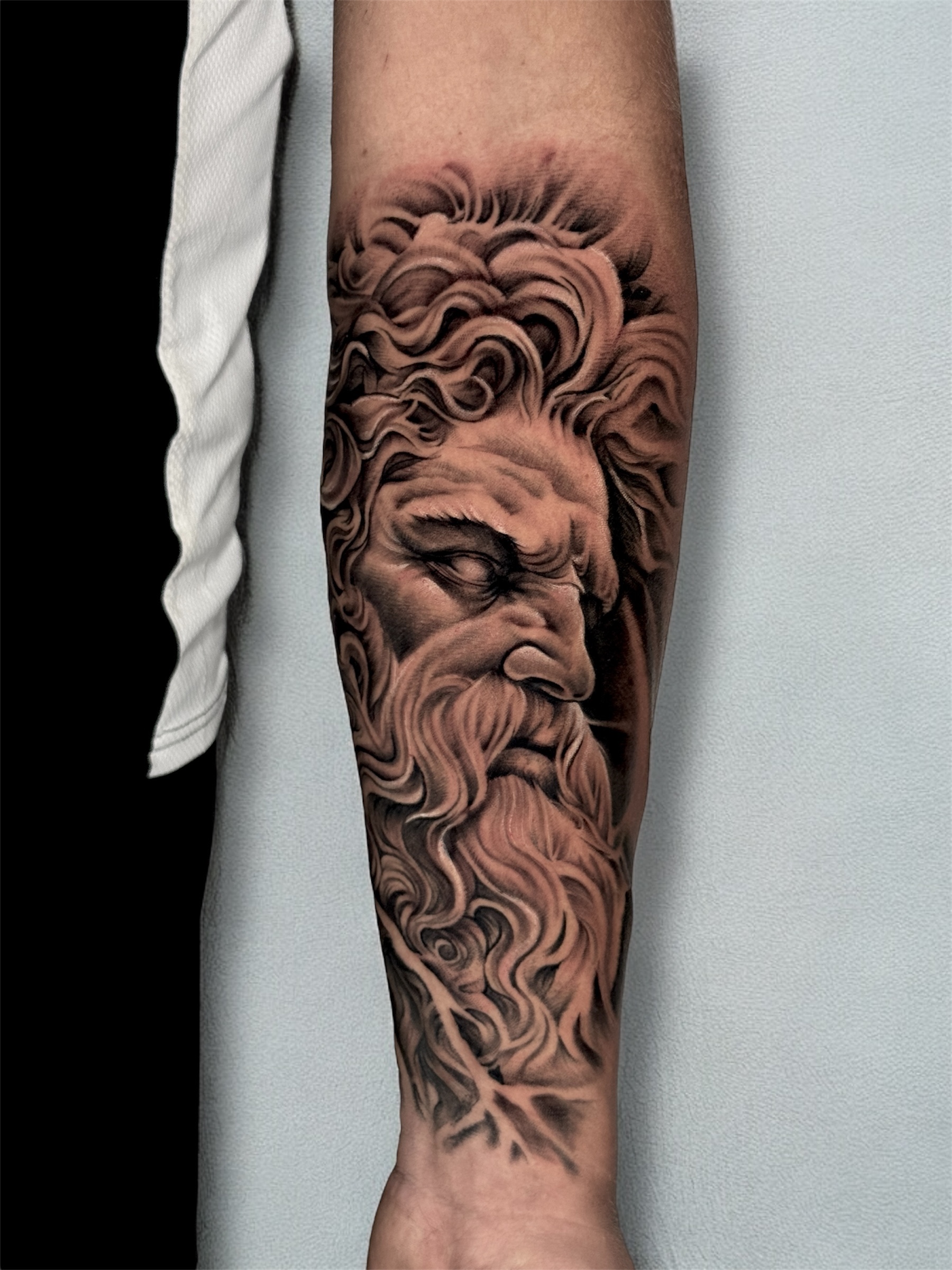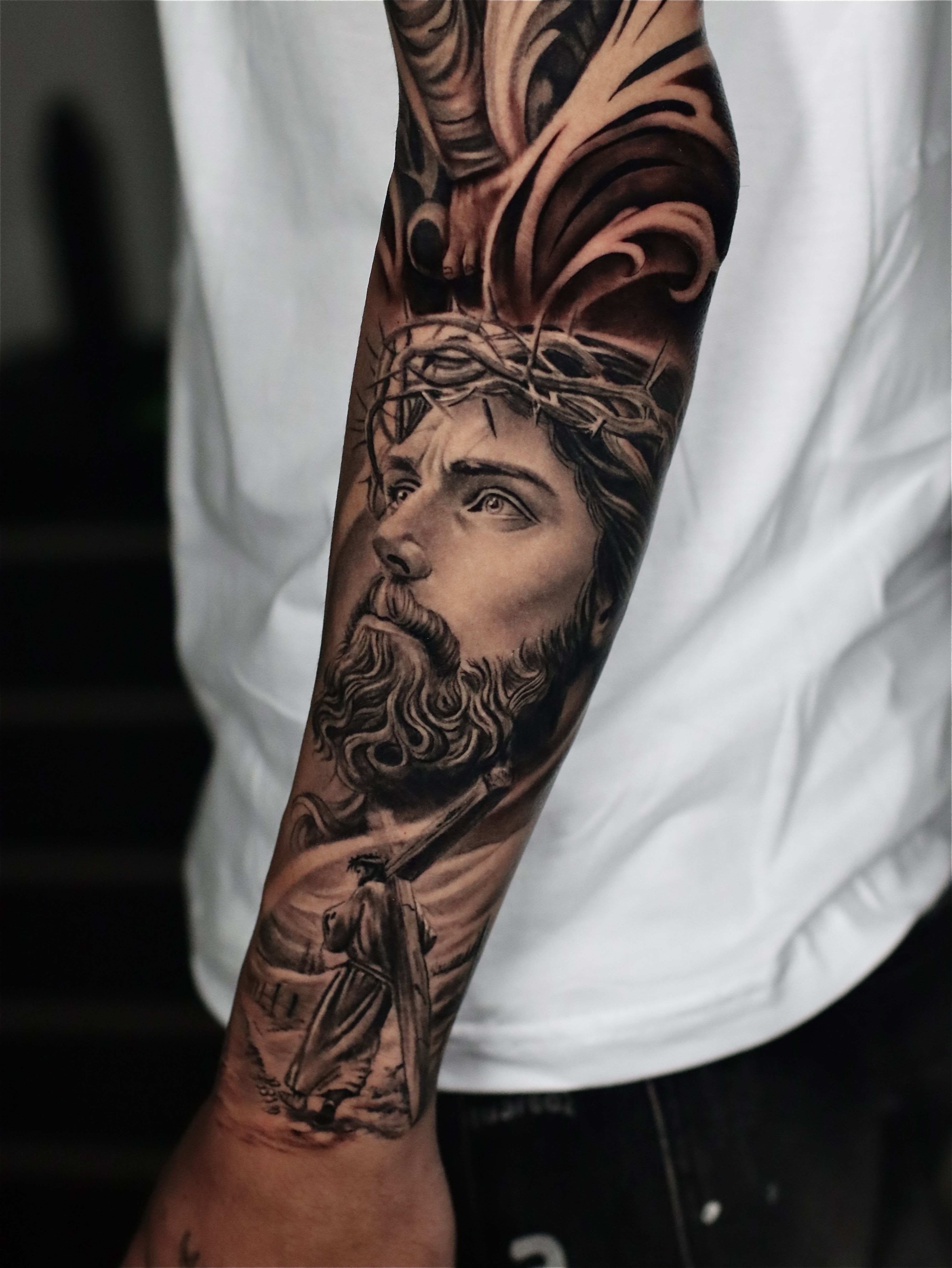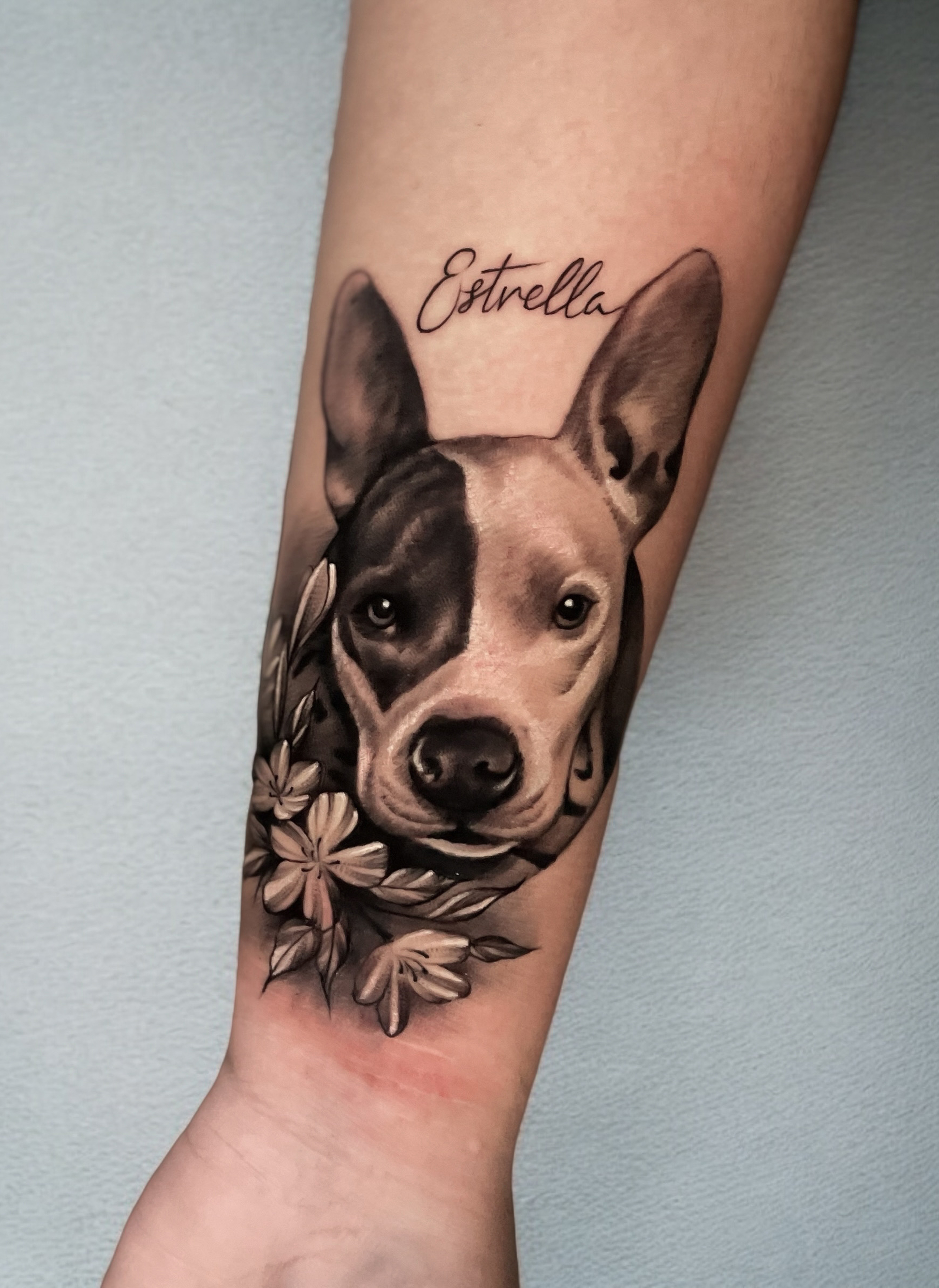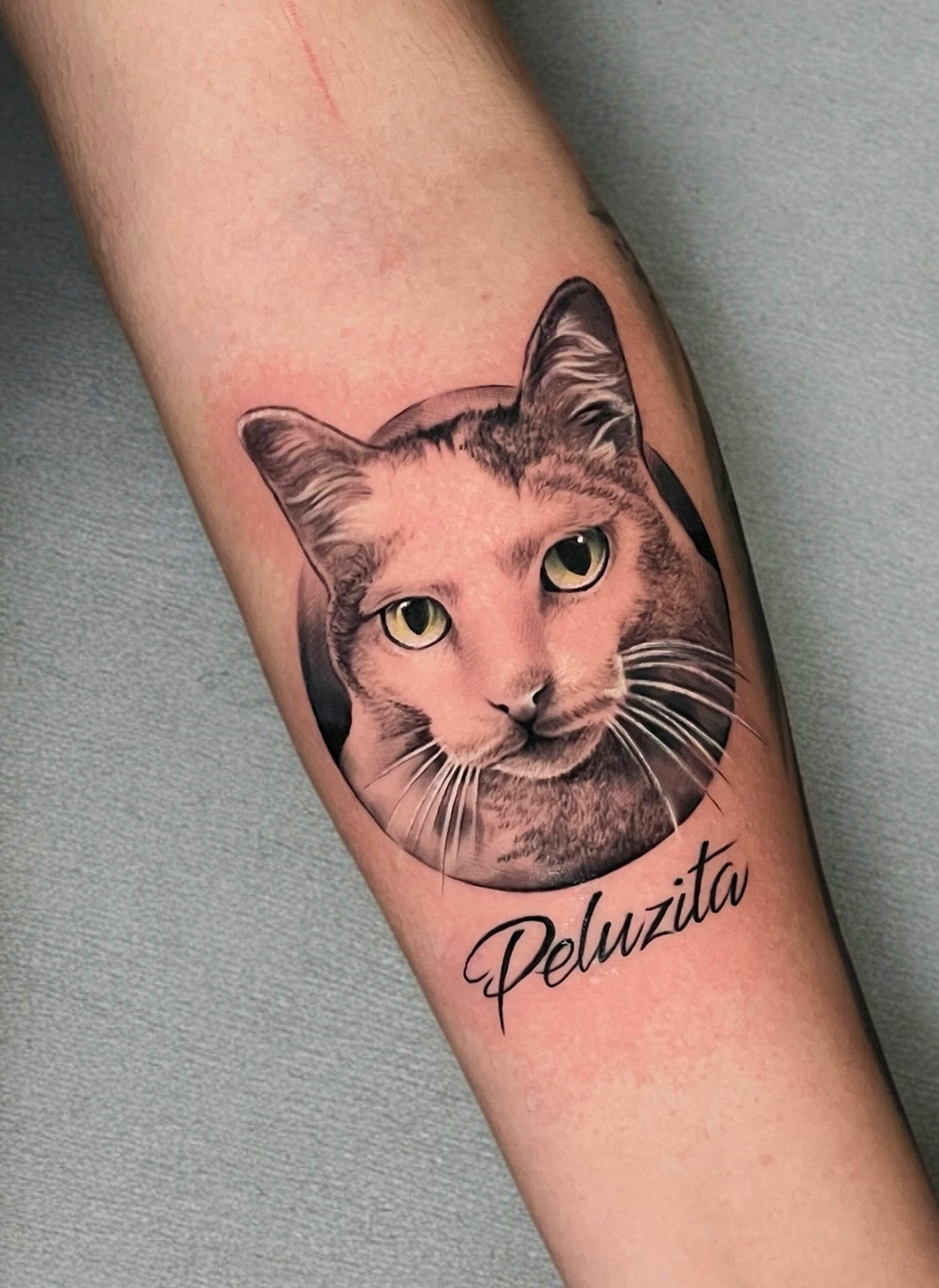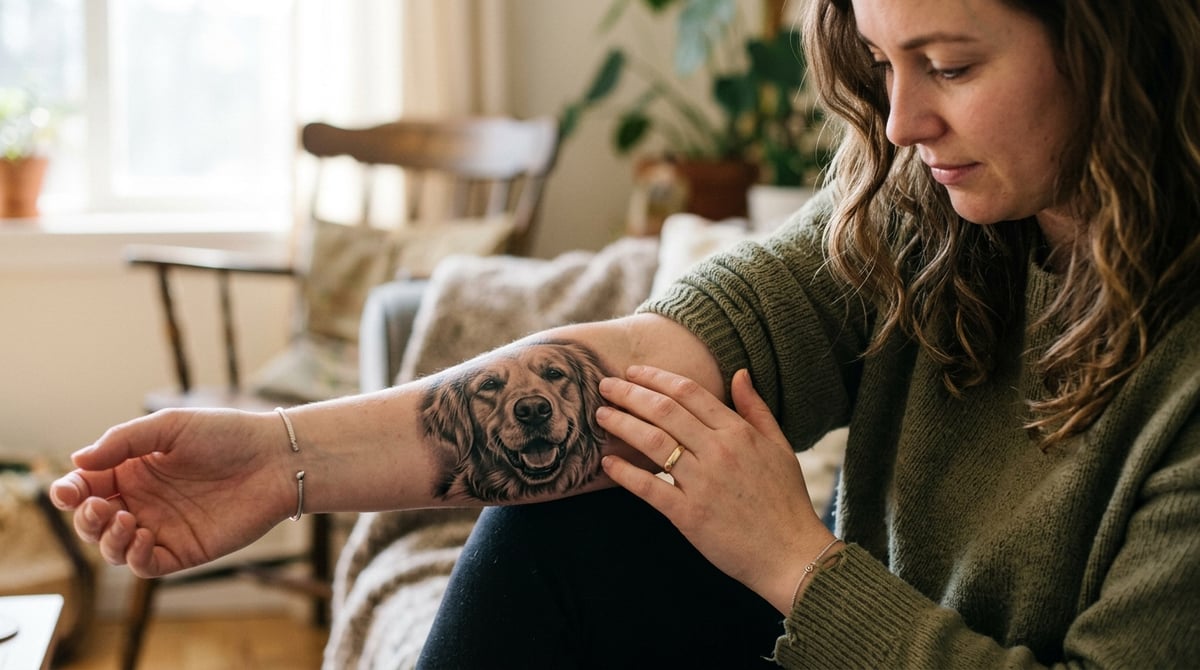
Getting your pet's portrait tattooed is one of the most intimate and permanent acts you can do with your skin. It's not an aesthetic whim — it's a tribute, a way to carry with you forever someone who shared years of your life. And precisely for that reason, it's one of the most demanding tattoos for any artist: there's no margin for error when the client can compare the result against a person — or an animal — they love deeply.
At Legassy Studio we've completed dozens of pet portraits in realism, and through that process we've learned exactly what separates a portrait that moves you from one that disappoints you. In this article we tell you everything you need to know before making this decision.
Why is a pet portrait the most technically demanding tattoo?
A pet portrait in realism requires the artist to faithfully reproduce fur texture, eye depth, and facial expression using only black ink and its gradations. There's no color to mask an imprecision: everything shows in the purest black and white. Similarity to the original subject is the only measure of success, and the client compares it against the photo burned into their memory.
This means not just any tattoo artist can create a good pet portrait. It requires an artist with specific training in photographic realism, mastery of fine gradients, and the ability to interpret volume from a two-dimensional photograph. At Legassy Studio we have artists specialized precisely in this type of work.
The photo: the number one factor in the result
Here's the point many clients underestimate: the quality of the final portrait depends more than 50% on the photograph you provide. We're not exaggerating. The artist works from that reference, and if the photo has poor lighting, is blurry, has the animal in motion, or was taken from far away, the result will suffer regardless of the tattoo artist's talent.
These are the characteristics of an ideal photo for a pet portrait:
- High resolution: The larger and sharper the photo, the better the artist can see the details of the coat, nose texture, eye reliefs.
- Good natural lighting: Photos with natural side lighting (not direct flash) show the animal's volumes and shadows in a way the artist can reproduce.
- Subject still and in focus: The animal must be sharp. Photos with movement produce blurry textures that are impossible to interpret accurately.
- Representative expression: Choose the photo where your pet has the expression that most characterizes them: curious, affectionate, alert. That's what will remain on your skin forever.
- Front or three-quarter angle: Front-facing or slightly side portraits work better for tattoos than aerial or extreme low angles.
Color or black & grey?
This is the question clients debate most, and the technical answer almost always favors black & grey. The reason is simple: color tattoos over time lose saturation, colors migrate, and the palette desaturates. A black & grey realism portrait, on the other hand, can remain for decades with relatively few changes.
Additionally, black & grey realism has a photographic depth that color rarely achieves on skin. The nuances of fur, the moisture of the snout, the shine of the eye: all of this reproduces better in black than in color when the artist masters fine gradients. For pets with very colorful coats (like orange cats or bicolor dogs), in some cases color can be a valid option, and the artist will advise you on which is best in your specific case.
Size: how much space does a portrait need?
A pet portrait needs a minimum size to reproduce the level of detail that makes it recognizable. A portrait that's too small loses eye details, coat textures, and expression nuances. As a general rule, we recommend a minimum of 10–12 cm tall for a quality result.
The most popular areas for this type of portrait are the forearm, arm (outer part), calf, and back. All these areas offer sufficient flat surface to work the detail and don't have too much muscle movement that could distort the design over time.
The process: from photo to skin
Once you have the photo and have decided on size and area, the process begins with a consultation where the artist evaluates the portrait's feasibility with that specific photograph. If the photo is suitable, they prepare a digital sketch showing you how the design will look adapted to your body.
On session day, the artist applies the design stencil to your skin and works from the darkest areas (eye depths, coat shadows) to the lightest (highlights, light points). The process can take 3 to 8 hours depending on size and complexity, and in some cases is divided into two sessions to guarantee result quality.
One important thing: during healing, the tattoo may look less defined. The skin flakes, the ink settles, and some areas may look duller. This is completely normal. The real result is visible 4 to 6 weeks after the session ends, when the skin has fully regenerated.
What about when the pet is no longer here?
Many of our clients contact us after losing their companion for a memorial tattoo. In these cases the process is the same, but the emotional weight is greater and as artists we understand that. If you're in this grieving process, we recommend waiting a few weeks before making the decision — not for technical reasons but so you can arrive at the appointment from a place of love and celebration rather than fresh pain.
A memorial tattoo for a pet is one of the most beautiful acts we've been privileged to accompany. If you're interested in exploring this possibility, write to us with your story and your companion's photo: the consultation is always commitment-free.