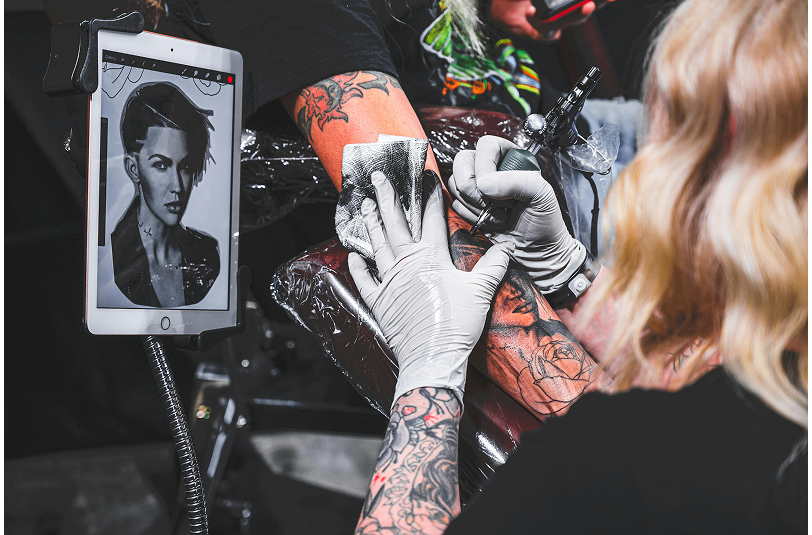
You just got a tattoo and feel that mix of excitement and responsibility. You know your artist did excellent work, but now everything depends on how you care for it over the next few weeks. Proper care not only ensures your tattoo looks perfect, but also prevents infections, color loss, and healing problems that can ruin the final result.
In Cali, where warm weather and sun exposure are constant factors, tattoo care takes on special importance. This guide will take you day by day from the moment you leave the studio until your skin has fully healed, giving you the tools and knowledge needed to care for your new piece of art in the best way possible.
The first hours after getting tattooed
The first hours are critical. Your artist will have covered the tattoo with a bandage or protective film, and it's essential that you keep it that way for the time they indicate, usually between 2 and 6 hours depending on size and technique used. This bandage protects the open wound from bacteria, dust, and friction while the skin begins its healing process.
During this time, it's normal to feel a slight burning sensation and notice some ink and plasma coming out. This is completely normal: the ink that comes out is what didn't settle in the dermis, and the plasma is part of the natural healing process. Don't worry if you see ink stains on the bandage; this doesn't mean your tattoo is fading.
Avoid touching, scratching, or rubbing the area during these first hours. If you feel discomfort, you can take a mild pain reliever if your artist recommends it, but the most important thing is to keep the bandage clean and dry. If the bandage gets wet accidentally or comes off early, consult with your studio to know how to proceed.
Removing the bandage and first cleaning
When it's time to remove the bandage, do it very carefully under warm running water. Never pull the bandage off dry, as you can damage sensitive skin and pull off scabs that aren't ready yet. Let the warm water soften the adhesive and remove it slowly, moving it in the direction of hair growth if necessary.
Once the bandage is removed, gently wash the tattoo with warm water and unscented neutral soap. Use only your fingertips to make gentle circular motions, without rubbing or applying pressure. The goal is to remove any residue of ink, plasma, or dried blood without agitating the skin. Rinse completely with warm water until no soap residue remains.
To dry, use a clean paper towel or a soft cotton towel, gently patting the area. Never rub or use rough towels. The tattoo must be completely dry before applying any cream. If you live in Cali, make sure the area is well dried, as humidity can favor bacterial growth.
First cream application and initial routine
Once the tattoo is completely dry, apply a very thin layer of the cream your studio recommended. The key is using a minimal amount: the cream should absorb almost immediately, without leaving a shiny or sticky layer. Too much cream can clog pores, prevent the skin from breathing, and create a humid environment favorable for bacteria.
The most common creams recommended by professional studios include Bepanthen, Aquaphor, or specific tattoo creams. Each studio has its preferences based on years of experience and how skin reacts in the local climate. In Cali, where humidity can be high, many artists prefer lighter creams that allow better breathability.
During the first days, repeat this cleaning and cream application process 2 to 3 times a day, or according to your studio's specific instructions. Keep the tattoo clean but don't over-wash it, as this can dry out the skin too much and delay healing. Consistency in routine is more important than exact frequency.
First week: normal signs and what to expect
During the first week, it's normal for the tattoo to look red, somewhat swollen, and warm to the touch. You may feel discomfort similar to a mild sunburn, and it's common for the area to be a bit sensitive. These are signs that your body is working to heal the wound, not cause for concern.
Around the third or fourth day, you'll start to notice that the tattoo surface looks duller and may start forming thin scabs. This is completely normal and part of the healing process. The old skin is preparing to shed and make way for a new layer. During this phase, it's crucial that you don't scratch or pick these scabs, no matter how tempting it is.
If the tattoo itches a lot, you can gently pat it with a clean palm, but never scratch. If the itching is very intense, you can apply a very thin layer of cream, but remember that itching is a sign that the skin is healing. Keep the area clean, moisturized with cream in thin layers, and protected from tight clothing or constant friction.
- Cleaning: 2-3 times a day with warm water and neutral soap
- Drying: Gentle patting with clean towel or paper
- Moisturizing: Very thin layer of recommended cream, 2-3 times a day
- Protection: Loose clothing, avoid friction and sun exposure
- Avoid: Pools, ocean, hot tubs, direct sun, intense exercise
Second week: peeling phase
The second week is usually the most visually challenging. The tattoo will start to look dull, with scabs peeling off and skin flaking. Many people get scared during this phase because they think the tattoo is fading or something is wrong, but it's actually exactly what should happen. The old skin is shedding to reveal the new skin underneath, where the ink is deposited in the dermis.
During this phase, it's normal to see small flakes of skin with ink attached. This doesn't mean you're losing ink from the tattoo; it's simply the ink that remained in the superficial layers of skin that are shedding. The real tattoo is deeper, in the dermis, and will remain there.
Continue with your gentle cleaning routine and cream application in thin layers. If the scabs look very thick or there are areas that concern you, you can consult with your studio, but generally you just need to maintain the routine and be patient. Especially avoid scratching or rubbing during this phase, as you can pull scabs off early and create areas where ink is missing.
Third and fourth week: visible improvement
Starting in the third week, you'll begin to see significant improvement. The scabs will have mostly disappeared, the skin will look more even, and the tattoo color will start to look more stable and defined. The tattoo should already look quite good to the naked eye, although the skin may still feel a bit tight or sensitive to touch.
During this phase, you can reduce cream application frequency to once or twice a day, depending on how your skin feels. If the skin feels dry or tight, apply cream. If it feels soft and comfortable, you can space out applications more. Listen to your skin and adjust the routine as needed.
Although the tattoo looks good superficially, deep healing still continues. The skin continues regenerating in deeper layers, and it's important to maintain good habits. You can start doing normal activities, but continue avoiding submerging the tattoo in stagnant water, prolonged sun exposure, and excessive friction.
Following months: complete healing
After the first month, the tattoo should look completely stable and the skin should have mostly recovered its normal texture. However, complete healing can take between 2 and 4 months, depending on tattoo size, body placement, and your skin type. During this time, the skin continues adjusting and the ink settles completely into place.
You can return to your normal life routine, but continue protecting the tattoo from the sun with high SPF sunscreen (50 or higher) whenever it's exposed. In Cali, where solar radiation is intense year-round, this is especially important. The sun is the biggest enemy of tattoo longevity, and protecting it from the start ensures it maintains its brightness and definition for years.
If you notice that any area of the tattoo needs a touch-up after complete healing, this is normal and your artist can do it. Some areas, especially those with a lot of movement or constant friction, may lose a bit of ink during healing. This isn't a problem; it simply means you need a touch-up session, which is a normal part of the process.
Warning signs: when to seek help
Although most tattoos heal without problems following these steps, it's important to recognize when something isn't right. If after several days the redness worsens instead of improving, if there's thick discharge with a bad smell, fever, chills, or intense pain that doesn't decrease, these may be signs of infection.
Other warning signs include extreme swelling that expands beyond the tattoo area, red lines extending from the tattoo, or sharp pain that worsens over time. If you experience any of these symptoms, don't wait for it to improve on its own. Contact your studio immediately and seek medical attention if necessary.
It's also important to differentiate between normal signs and real problems. A bit of redness, light swelling, and discomfort during the first days is completely normal. What should concern you is when these symptoms worsen after several days or when new symptoms appear like fever or discharge with a bad smell.
Caring for a tattoo step by step requires patience, consistency, and attention to detail. By following this guide from day one until complete healing, you give your skin the best conditions to heal correctly. Remember that every body is different and times can vary, but the fundamental principles of gentle cleaning, proper moisturization, and protection from sun and friction are universal. With proper care, your tattoo will look perfect and stay that way for many years.


