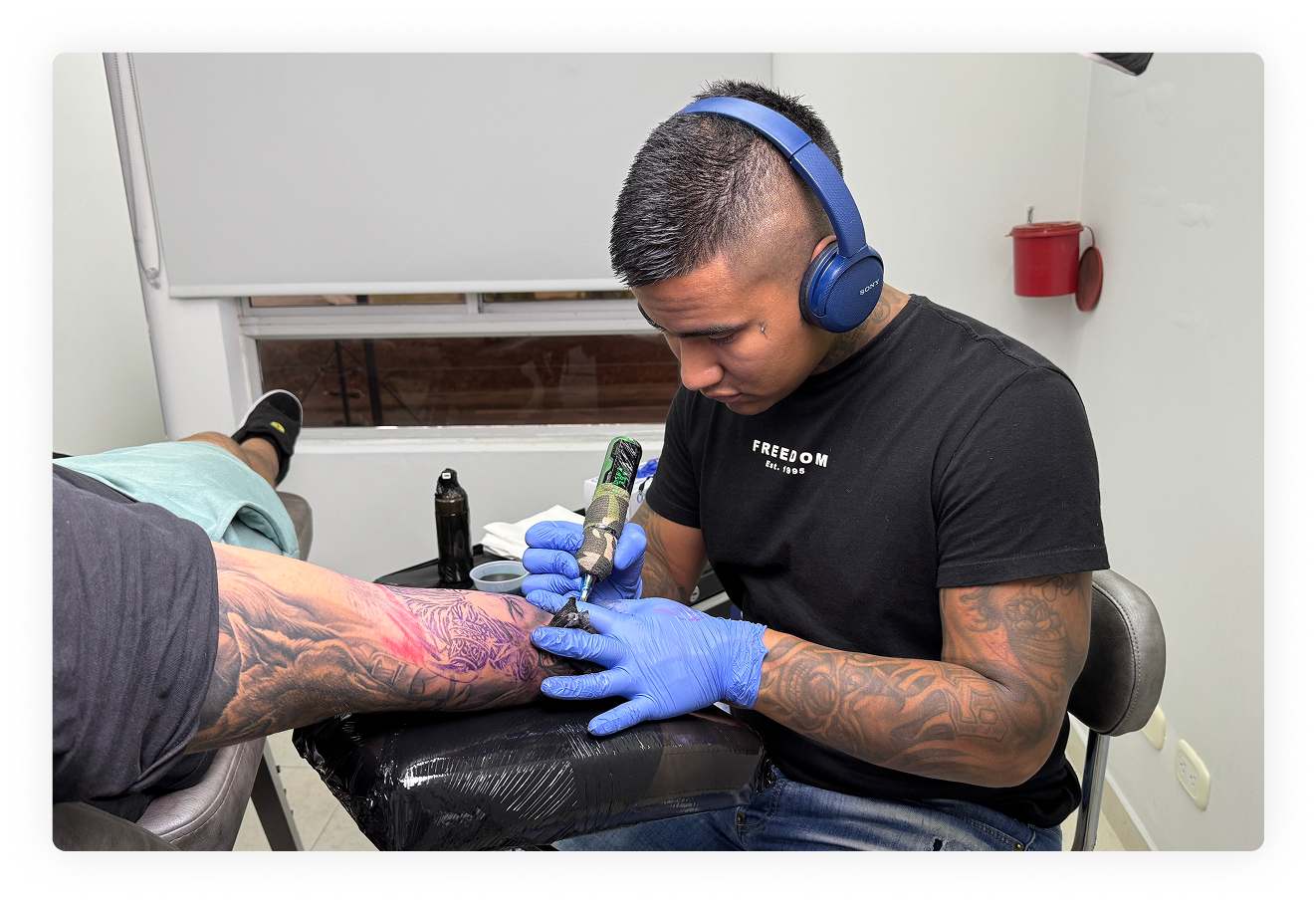
If you already have tattoos—or you’re planning one—and you also do laser hair removal, there’s a rule professionals repeat constantly: laser hair removal should not be performed over a tattoo. It’s not a preference; it’s physics, pigment, and real burn risk.
People often ask if you can “quickly pass over it,” lower the power, or if it’s safe once the tattoo is healed. The responsible answer is that even when healed, tattoo ink is still pigment sitting in the dermis, and it doesn’t interact with laser energy the same way as untattooed skin.
How laser hair removal works (and why pigment matters)
Laser hair removal relies on selective photothermolysis: the beam targets a chromophore (mainly melanin in the hair) and heats it to damage the follicle. The key is that the laser "prefers" pigment that absorbs energy.
A tattoo is pigment placed in the dermis. Depending on the color and density of the ink, that pigment can also absorb laser energy. When that happens, heat concentrates in the tattooed area and can cause anything from strong irritation to burns, blisters, or permanent texture and color changes.
So even though the intended target is the hair follicle, the tattoo pigment becomes an unintended absorber. And because ink sits near the follicle plane, the thermal impact can be direct.
What can happen if laser is applied over a tattoo
The most obvious risk is a burn: intense redness, blistering, and pain. But there are also delayed effects: hyperpigmentation (darker patches), hypopigmentation (lighter patches), and scarring from thermal injury.
The tattoo itself can change too. Some pigments can shift tone, look faded, or lose crispness. In worse cases, ink becomes patchy and the design ends up uneven. Lowering the power may reduce risk, but it doesn’t remove the underlying mechanism.
There’s also a practical reality: if the laser irritates the area, aftercare becomes harder and you increase the chance the tattoo ages poorly. Traumatized skin heals differently.
How to plan if you want both laser hair removal and tattoos
Planning depends on your priority. If your priority is full hair removal in an area (legs, underarms) and you don’t have a tattoo there yet, the simplest approach is to finish laser first and tattoo later. That way you don’t create a permanent "no-laser" zone.
If you already have the tattoo and you want laser hair removal, the typical recommendation is to treat around the tattoo, leaving a safety margin (which varies by device and provider). That means you can remove hair in the surrounding area, but the tattoo itself must be excluded.
- Best practices to avoid problems:
- Always disclose tattoos (and show the area) before starting laser.
- Ask the provider to outline the tattoo and leave a no-shot margin.
- Avoid "quick passes" over ink, even if it’s just an edge.
- If you plan a tattoo in an area currently being lasered, finish laser first.
- Protect both the tattoo and treated skin from UV exposure to reduce pigment issues.
What if the tattoo is tiny or very light?
People often say “but it’s a tiny tattoo” or “it’s only fine line.” Ink is still present. A smaller tattoo means a smaller risk area, but it doesn’t remove the absorption-and-heat mechanism.
Lighter colors may absorb differently than dense black, but there’s no universal rule because outcomes depend on the laser type (diode, alexandrite, Nd:YAG), wavelength, your skin, and the ink composition. That’s why serious providers don’t gamble.
If a clinic tells you it’s safe to shoot over a tattoo “no problem,” that’s a red flag. The correct approach is to avoid the tattoo and work around it.
If it already happened: what to do after laser on a tattoo
If laser was applied over a tattoo and you notice strong pain, burning, blisters, or sudden color changes, treat it like a thermal injury: cool with water (no direct ice), don’t pop blisters, and seek medical evaluation if the burn looks significant.
Avoid harsh or "miracle" products. Mild cases can recover; moderate to severe cases may require dermatology guidance to reduce inflammation and scarring risk.
Bottom line: tattoos and laser hair removal can coexist, but not in the same exact area. With smart planning, you can have both without compromising your skin or your tattoo.


