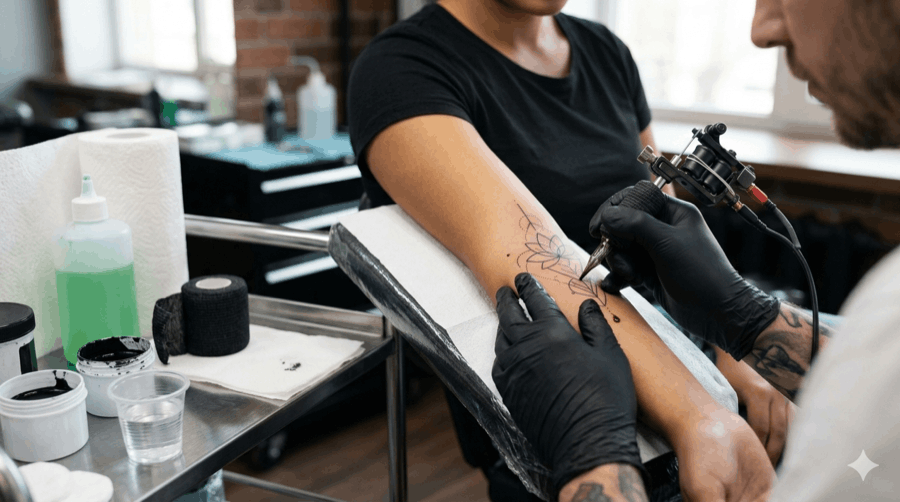
Your first tattoo session can generate many emotions: excitement, nervousness, anticipation, and perhaps a bit of anxiety. It's completely normal to feel a mix of these emotions, especially if you're not sure what to expect. Understanding the process step by step can help you feel more relaxed and prepared for your first experience. This guide will take you through everything that happens during a typical tattoo session, from the moment you arrive at the studio until you leave with your new piece of art.
Knowing what to expect can make the experience much more pleasant and less intimidating. In this article we'll cover each stage of the process: arrival and initial preparation, design and placement process, the tattooing itself, and what happens at the end of the session. We'll also give you tips on how to prepare and what to do if you need a break during the process. With this information, you'll be completely prepared for your first session.
Arrival at studio and initial preparation
When you arrive at the studio for your first session, you'll generally begin with a brief conversation with your artist. This is the time to review the final design, confirm size and placement, and make any last adjustments if necessary. The artist may show you the design on paper or on a tablet, and together you can make minor modifications before proceeding.
Once you're satisfied with the design, the artist will prepare the area where the tattoo will be done. This generally involves cleaning the skin with a disinfectant, shaving the area if there's hair (though this depends on placement), and preparing necessary equipment. The artist will also prepare the inks that will be used, which will be in sterile, disposable containers.
During this preparation, it's normal to feel nervous or anxious. Many people find it helpful to ask the artist questions about the process, which helps distract and feel more in control. A good artist will understand it's your first time and will be willing to explain each step and answer any questions you have. Don't be afraid to express your nerves: it's completely normal and the artist is used to working with people who are nervous.
Stencil application and positioning
Before starting to tattoo, the artist will apply a stencil of the design on your skin. This stencil acts as a guide to ensure the design is placed exactly where you want and at the correct size. The artist will place the stencil and ask you to review it in a mirror to make sure you're completely satisfied with placement and size.
This is a crucial moment: once the artist starts tattooing, making changes will be much more difficult. Take your time to review the stencil from different angles, especially if the tattoo is on an area you can see directly. If something doesn't look right or if you want to adjust position or size, this is the time to say so. A good artist will prefer to make adjustments now than have to correct later.
Once you're completely satisfied with stencil placement, the artist will begin preparing the tattooing equipment. You'll see the artist open sterile packages of needles, prepare the tattoo machine, and organize all necessary equipment. All equipment that comes into contact with your skin will be new and sterile, which is part of the safety standards every professional studio must follow.
- Design review: Confirm size, placement, and final details
- Area preparation: Cleaning and preparing the skin
- Stencil application: Placing the design guide
- Final verification: Review from different angles before starting
- Equipment preparation: Opening sterile materials
- Communication: Asking questions and expressing any concerns
The tattooing process
Once the artist begins tattooing, you'll feel the sensation of needles penetrating your skin. Pain intensity varies depending on tattoo placement, your personal pain tolerance, and design size. Many people describe the sensation as a combination of burning and itching, similar to a constant scratch. Some areas are more sensitive than others, but most people find the pain manageable.
During the process, the artist will work methodically, generally starting with the design lines and then moving to shading and colors if necessary. You may feel different intensity levels depending on which part of the design is being worked on. Lines may feel sharper, while shading and fill may feel more like a constant vibration. Many people find they get used to the sensation after the first few minutes and can relax during the rest of the session.
It's important to stay as still as possible during the process, as movement can affect work quality. However, if you need to adjust your position or take a break, don't hesitate to tell the artist. A good artist will understand and be willing to take breaks as needed. It's also normal to feel some light bleeding during the process, which is completely normal and part of the natural process.
Pain management and relaxation techniques
Managing pain during a tattoo session is a common concern for many people, especially during their first session. There are several techniques you can use to make the process more comfortable. Deep, controlled breathing can help you relax and manage pain. Many people find it helpful to focus on their breathing or on distractions like music or conversation.
Some people find it helpful to bring music or podcasts to listen to during the session, which can help distract you from the process. However, make sure the volume isn't so high that you can't hear the artist if they need to communicate with you. You can also bring a trusted friend for moral support, though check first with the studio if this is allowed, as some studios have policies about companions.
It's important to communicate with your artist if pain becomes too intense or if you need a break. A good artist wants you to have a positive experience and will be willing to take breaks as needed. Don't feel you must "tough it out" without saying anything: it's better to take regular breaks than to try to endure everything at once and have a negative experience. As we mentioned in our beginner's guide, open communication is key to a successful experience.
During the session: what to observe
During the session, it's normal to want to observe the process, but it's also important not to move too much. You can observe the artist's work, but make sure to stay in the agreed position. Many studios have strategically placed mirrors that allow you to see progress without having to move or turn.
It's normal to see some blood and ink during the process. The artist will periodically clean the area with an antiseptic solution to keep the area clean and be able to see the work clearly. It's also normal for the area to look red and swollen during and after the process, which is part of your body's natural response to the tattooing process.
If you have any concerns during the process, don't hesitate to express them. If something doesn't feel right, if pain is more intense than expected, or if you have any questions, the artist is there to help you. A good artist will prefer you express your concerns than have you uncomfortable or anxious during the process.
Session completion and initial care
Once the artist finishes tattooing, they'll clean the area and apply a protective cream or ointment. The artist will give you detailed instructions on how to care for your new tattoo during the coming weeks. It's crucial that you pay attention to these instructions and follow them carefully, as aftercare is essential for the tattoo to heal correctly.
The artist may cover the tattoo with a bandage or protective film that you should keep on for a specific period (generally a few hours). They'll explain when and how to remove the bandage, how to clean the tattoo, and what products to use for care. They'll also tell you what to avoid during the first weeks, like sun exposure, submerging the tattoo in water, or using certain products.
Before leaving the studio, make sure you have all the information you need. Ask about any questions you have about care, about when you can expect to see the tattoo completely healed, and about any warning signs you should watch for. Many studios also offer follow-up after the session, where you can contact them if you have questions or concerns during the healing process.
Session time and what influences duration
The duration of a tattoo session varies significantly depending on design size and complexity. A small, simple tattoo may take only 15-30 minutes, while larger, more complex pieces may take several hours. It's important to have realistic expectations about how long your session will take, which your artist should be able to estimate during the prior consultation.
Factors that influence duration include design size, amount of detail, whether it includes color or just black lines, and tattoo placement. Some areas may be more difficult to work due to skin texture or area curvature, which may take more time. Also, if you need to take several breaks during the session, this can extend total time.
It's important not to rush the process. A good artist will take the time necessary to do the work correctly, and it's better to have a longer session than rushed work that doesn't look good. If you have time constraints, discuss it with your artist beforehand so they can plan the session appropriately or divide the work into multiple sessions if necessary.
Your first tattoo session is a unique experience that can be exciting and positive if you prepare properly. Knowing what to expect at each stage of the process can help you feel more comfortable and relaxed. Remember that it's normal to feel nervous, that pain is generally manageable, and that a good artist will be there to guide you through the process. With proper preparation and the right attitude, your first session can be the beginning of a lasting relationship with tattoo art that you'll enjoy for many years.


