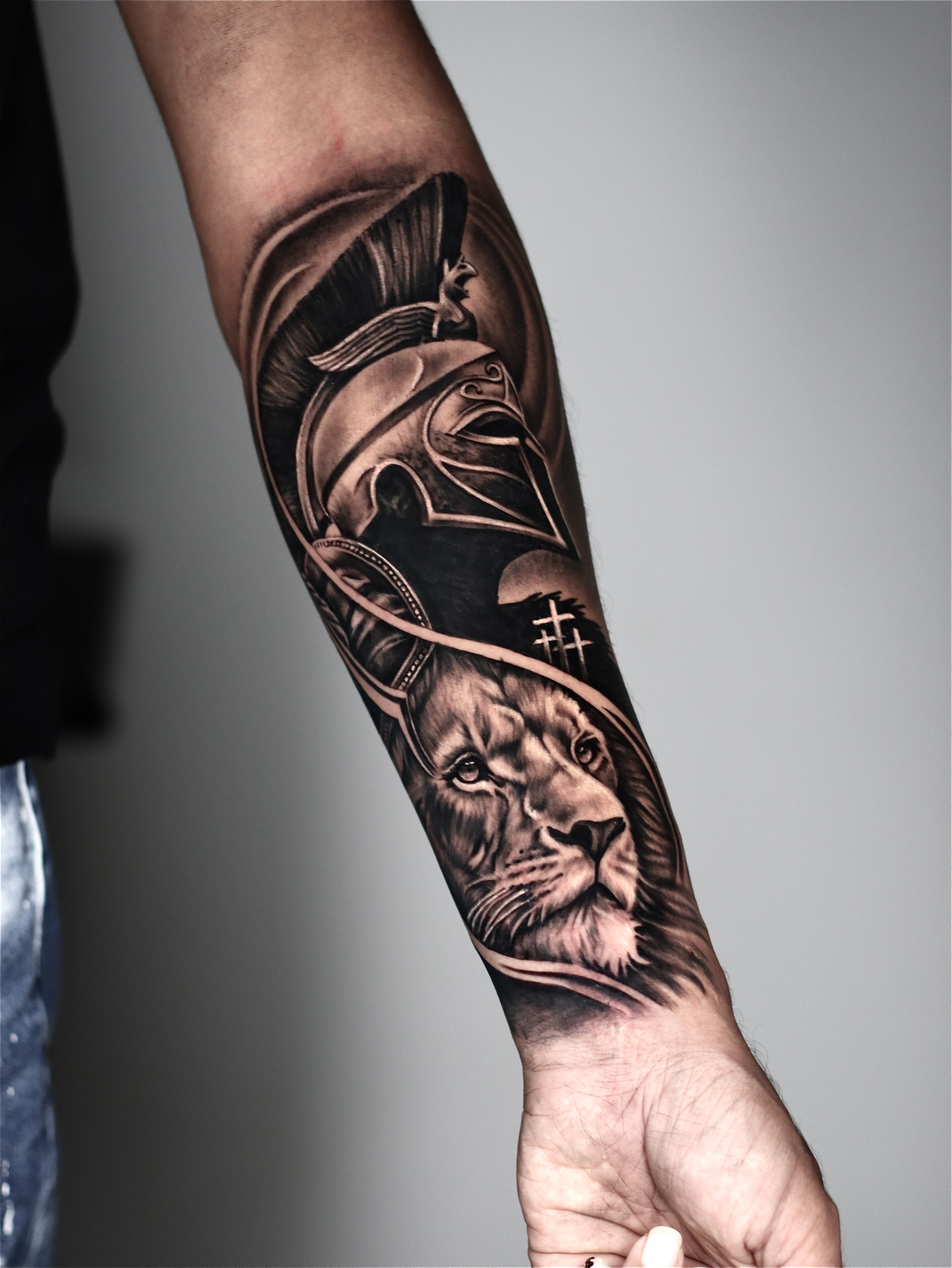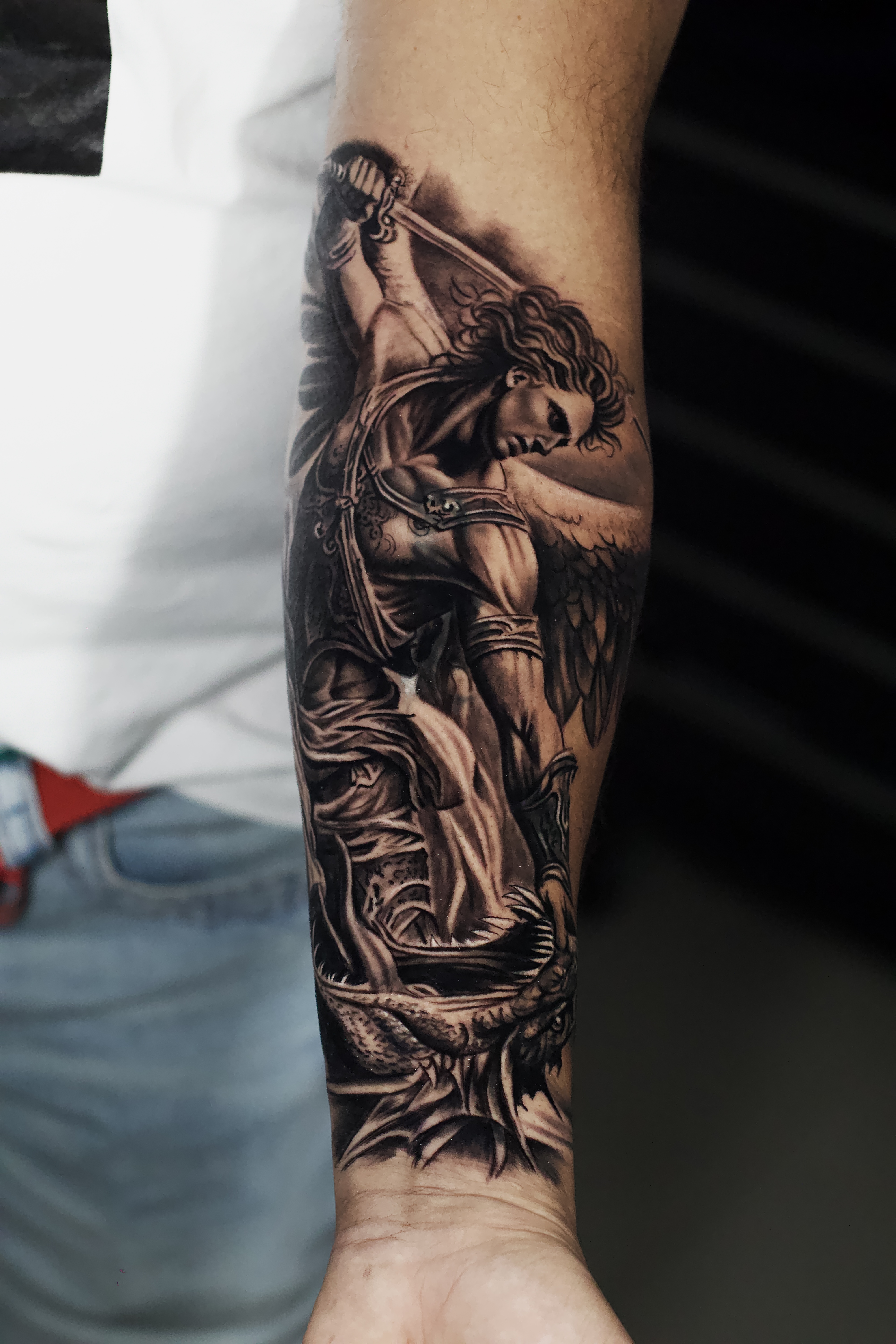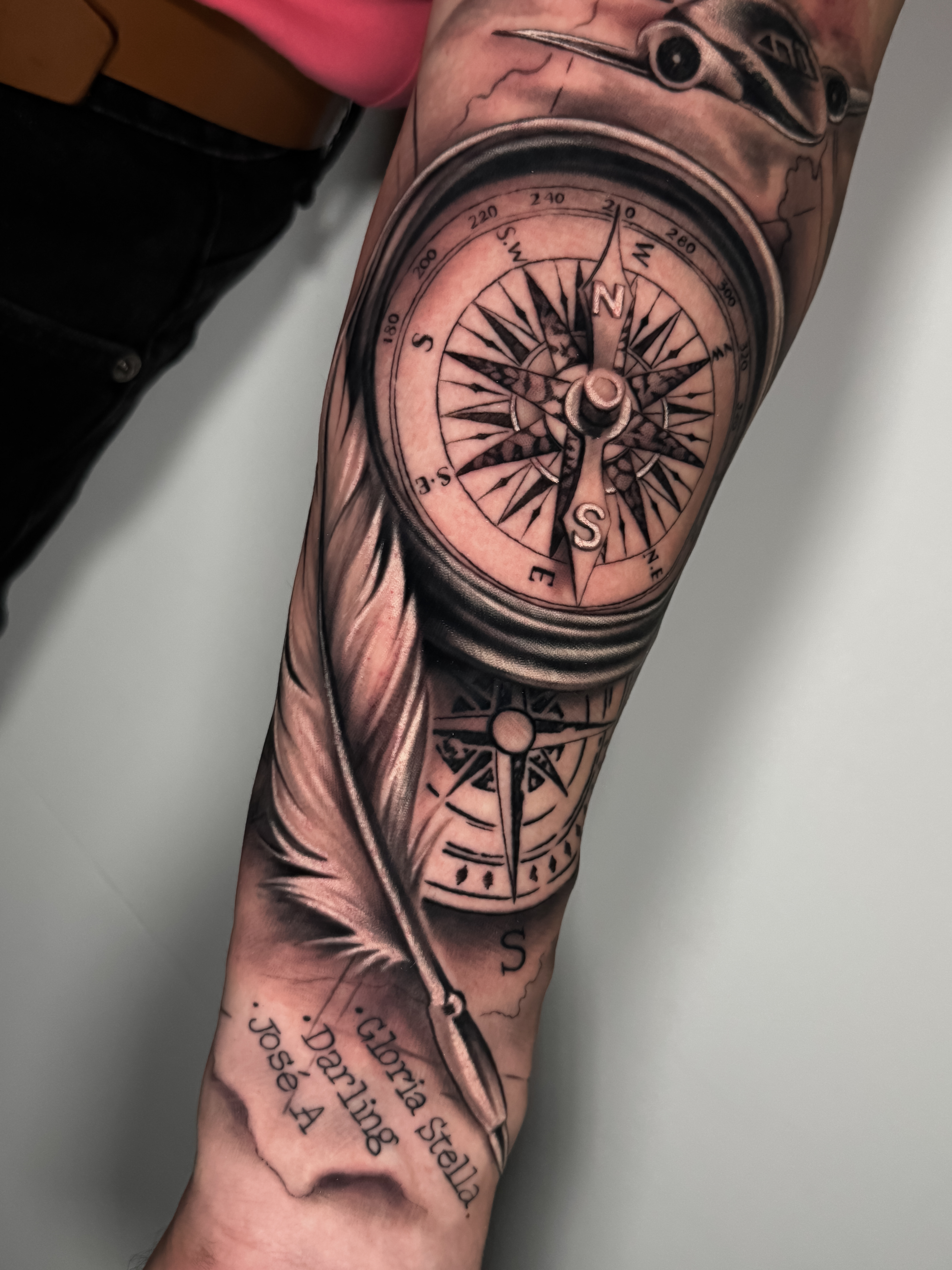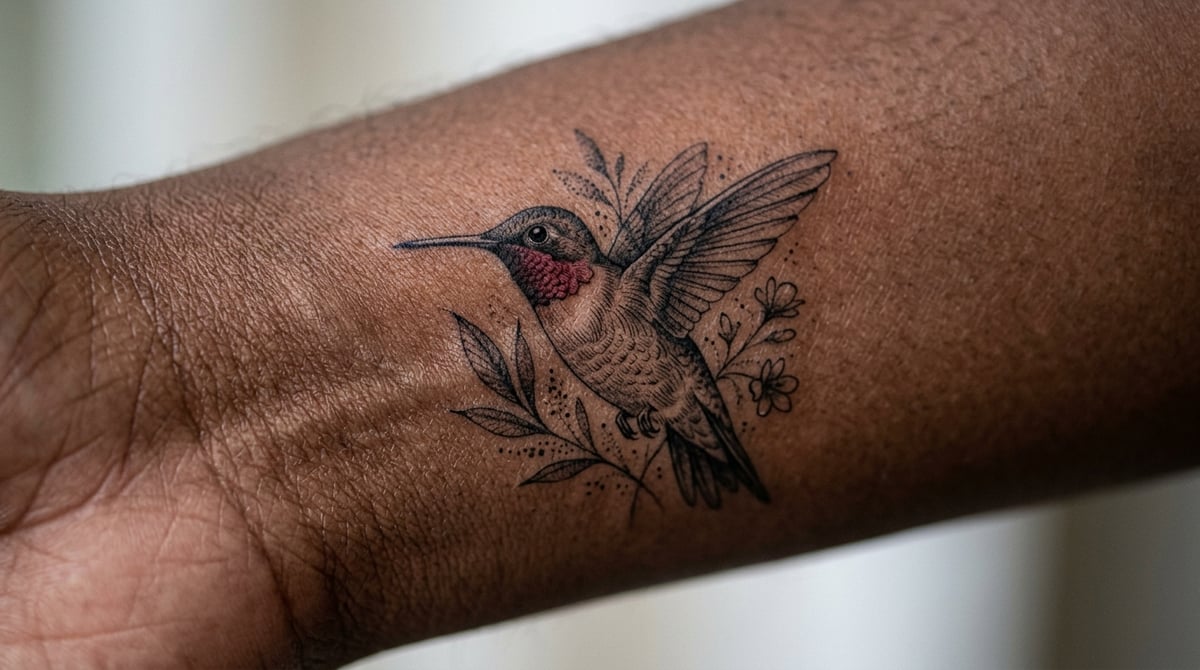
Micro realism is exactly what its name suggests: photographic realism executed at a reduced scale. Where traditional realism reproduces details with the fidelity of a photograph in large pieces, micro realism does the same in a space of just 4 to 10 cm. It's the favorite technique of those who want a highly detailed but discreet tattoo, and it's undoubtedly one of the most demanding for the artist.
The demand for micro realism has grown enormously in recent years, driven by people seeking elegant pieces they can wear in visible areas without the visual impact of a sleeve or large format piece. It's also popular as a memorial, as a tribute to something or someone important, and as a first piece in a larger collection they'll build over time.
What differentiates micro realism from a common small tattoo?
This is the key question. A small tattoo can be a symbol, a letter, or a fine line. Micro realism, however, attempts to reproduce all the elements of a realistic portrait or scene in a minimal space: fur, skin textures, eye depth, complex floral details, gradations of light and shadow.
The technical difference is enormous. While a small fine-line tattoo can be executed relatively quickly, micro realism requires specialized very fine-tipped needles, surgically precise diluted ink, and an extraordinarily steady hand. A millimeter error at this scale is immediately visible and has no easy correction.
How much detail is it realistic to expect?
Here's the most important conversation you need to have with your artist before deciding. Micro realism has physical limits determined by needle size and skin biology. The smaller the design, the less absolute detail it can contain without the ink expanding and mixing over time.
As a general rule:
- A design of 3 to 5 cm can contain clear shapes, some texture and contrast, but not fine fur detail or facial expression.
- A design of 6 to 8 cm allows more defined elements: eye details, differentiated fur strands, flower or feather textures.
- A design of 9 to 12 cm is where micro realism can truly shine with full complexity: recognizable portraits, detailed scenes, multiple textures.
What no honest artist promises in micro realism is exactly the same as in a large format design. Scale has technical consequences, and the art of micro realism is precisely knowing what to include and what to simplify so the result remains impactful.
How long does micro realism last?
This is probably the most important question in this article: how does micro realism age? The honest answer is that micro realism has a shorter sharpness lifespan than large format realism. Very fine lines and extreme detail tend to open up over time as ink naturally migrates through the skin.
This doesn't mean the tattoo will look bad: it means it may lose some definition after 5–10 years. With a good touch-up at that point, the piece can recover its sharpness. Factors that accelerate or slow this process include:
- Body area: High-friction areas (hands, wrists, feet) degrade detail faster than more protected skin areas (inner forearm, ribs).
- Sun exposure: Sun is the number one enemy of any tattoo. Micro realism exposed without protection can lose notable definition in just a few years.
- Skin care: Keeping skin moisturized and applying daily SPF where the tattoo is makes a real difference in detail longevity.
Recommended areas for micro realism
The best areas for a micro realism tattoo combine relatively flat surface, medium-thickness skin, and little exposure to friction. The most popular and technically viable are:
- Inner and outer forearm
- Upper arm (bicep, tricep)
- Calf
- Clavicle area (with the right artist)
- Behind the ear (only for very small and simple pieces)
Areas not recommended for micro realism are fingers, palms, feet, and any area with frequent skin folds.
The right artist: what differentiates micro realism from poorly executed pointillism
Choosing the right artist for micro realism is more critical than for any other style. Not all artists who do great work in large format have the patience and fine hand that micro realism demands. Look specifically for:
- A portfolio with fully healed micro realism pieces (not just freshly done)
- Photos taken in natural light, not just with filters or editing that can hide imperfections
- Client testimonials with pieces more than 2 years old
At Legassy Studio we can show you healed micro realism work from our artists' portfolios and honestly explain what's possible with your specific reference. If your idea is viable in micro realism, we'll confirm it. If it needs adjustments to work correctly at that scale, we'll tell you that too, because our goal is for you to be completely satisfied with the final result.
How to prepare for a micro realism session
Before your micro realism session, there are a few things you can do to maximize the quality of the result. First, make sure the skin in the area to be tattooed is in good condition: well-hydrated in the weeks prior and free from any sunburn, irritation, or recent shaving. Skin in good condition accepts ink more evenly, and in micro realism that evenness is everything.
On the day of the session, arrive rested and well-fed. Micro realism sessions require the client to remain very still for extended periods because the artist is working with extremely fine needles in minimal spaces. Any involuntary movement can affect the precision of a line. If you feel nervous or tend to shake when anxious, let the artist know beforehand so they can adapt the session pace.
Also, bring your references in the highest quality you can find. If your reference is a photograph, look for the highest resolution version possible. If it's a drawing or digital illustration, ask for the original file rather than a social media screenshot. Image quality directly translates to design quality, and in micro realism that relationship is especially tight.