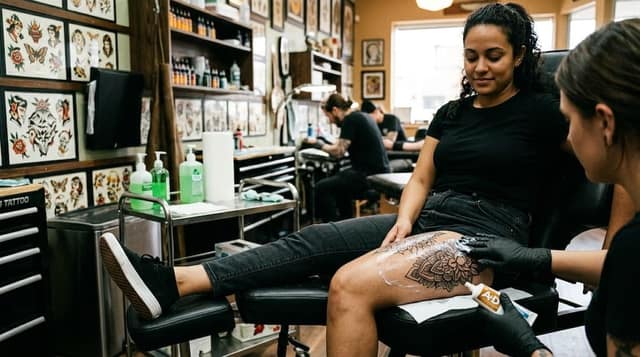
To care for a new tattoo you need three products: a fragrance-free mild soap to clean it, a cream that hydrates without clogging pores applied in a thin layer, and sunscreen once it's fully healed. Avoid products with alcohol, fragrance or too much petroleum jelly, and stick with what your studio recommends.
Choosing the right products to care for your new tattoo is essential to ensure it heals perfectly and maintains its shine and definition for years. With so many options available on the market, it can be overwhelming to know which products actually work and which can do more harm than good. Using the right products can make the difference between a tattoo that looks impeccable and one that loses color, gets infected, or heals poorly.
In this article we'll guide you through the essential products you need to care for your tattoo, from gentle soaps to specialized creams. We'll explain why each product is important, how to use it correctly, and what to look for when choosing between different brands. This information is especially valuable in Cali, where the climate can influence how your skin reacts to different products during the healing process.
Neutral soap: the essential first step
The soap you use to clean your tattoo during the first weeks is crucial. You must use a neutral soap, without fragrance and without aggressive ingredients. Soaps with fragrances, dyes, or strong antibacterial ingredients can irritate sensitive skin and delay the healing process. The goal is to keep the area clean without agitating the healing skin.
The best soaps for tattoos are those designed specifically for sensitive skin or for medical use. Look for soaps that are pH neutral, without aggressive sulfates, and that don't contain alcohol. Some popular options include pure glycerin soaps, hypoallergenic liquid soaps, or soaps specifically formulated for tattoos. The key is that it's gentle, cleans without drying out the skin too much, and doesn't cause irritation.
When washing your tattoo, use only your fingertips to make gentle circular motions. Don't use sponges, brushes, or anything that can rub the skin aggressively. The water should be lukewarm, not hot or cold, as extreme temperatures can irritate sensitive skin. Wash the tattoo 2-3 times a day during the first weeks, or according to your studio's specific recommendations. Remember that following a correct healing process is essential for successful healing.
Tattoo cream: hydration without clogging
The cream you use to moisturize your tattoo is probably the most important product in your care routine. The ideal cream should moisturize without clogging pores, allow the skin to breathe, and create a light protective barrier. Too much cream can create a humid environment favorable for bacteria, while too little can cause the skin to dry out too much and crack.
Bepanthen is one of the most recommended creams by professional studios worldwide. It's specifically formulated for wound care and contains dexpanthenol, which helps cell regeneration and keeps the skin hydrated. Another popular option is Aquaphor, which creates a protective barrier while allowing the skin to breathe. Both are excellent options, but it's important to use them in very thin layers.
Some studios also recommend creams specifically formulated for tattoos that contain ingredients like vitamin E, aloe vera, or natural oils. However, it's crucial to avoid creams with ingredients like excessive lanolin, pure petroleum jelly without other beneficial ingredients, or creams with fragrances or dyes. In Cali, where humidity can be high, many artists prefer lighter creams that don't create a sticky or greasy feeling.
- Bepanthen: Contains dexpanthenol, ideal for cell regeneration
- Aquaphor: Creates protective barrier, allows skin breathing
- Tattoo-specific cream: Formulated with beneficial ingredients like vitamin E
- Avoid: Creams with fragrances, dyes, excessive lanolin, or pure petroleum jelly
- Application: Very thin layers, 2-3 times a day as needed
- Consistency: Should absorb quickly without leaving a shiny layer
Sunscreen: essential after healing
Although you don't use it during the first weeks of healing, sunscreen becomes essential once your tattoo has completely healed. The sun is the biggest enemy of tattoo longevity, and protecting it from the start ensures it maintains its shine and definition for years. In Cali, where solar radiation is intense year-round, this is especially important.
You should use a sunscreen with SPF 50 or higher whenever your tattoo is exposed to the sun. Look for broad-spectrum sunscreens that protect against UVA and UVB rays. Mineral sunscreens with zinc oxide or titanium dioxide are excellent options, as they provide physical protection in addition to chemical protection. Apply sunscreen generously and reapply every 2 hours if you're exposed to the sun for prolonged periods.
It's important to start using sunscreen as soon as your tattoo has completely healed, generally after 4-6 weeks. Before that, keep the tattoo completely covered with clothing when going out in the sun. Once you start using sunscreen, make it a permanent habit. Each sun exposure without protection can cause the ink to fade gradually, especially in bright colors or fine-line tattoos.
Products you should avoid
As important as knowing what products to use is knowing what products to avoid. Many common products that people think help can actually damage your tattoo. Products with alcohol, like isopropyl alcohol or pharmacy alcohol, can dry out the skin too much and delay healing. Although alcohol kills bacteria, it also removes the skin's natural oils that are necessary for proper healing.
Topical antibiotic creams like Neosporin or similar should only be used if your artist or doctor specifically recommends them to treat an infection. Using antibiotics preventively can cause allergic reactions and isn't necessary if you follow a proper cleaning routine. Products with hydrogen peroxide should also be avoided, as they can bleach the ink and damage the skin cells that are regenerating.
Home remedies like toothpaste, undiluted essential oils, butter, or any product not specifically designed for wound care should be completely avoided. These products can cause irritation, allergic reactions, or infections. Trust the products recommended by your studio, which are based on years of experience and knowledge about what actually works for tattoo healing.