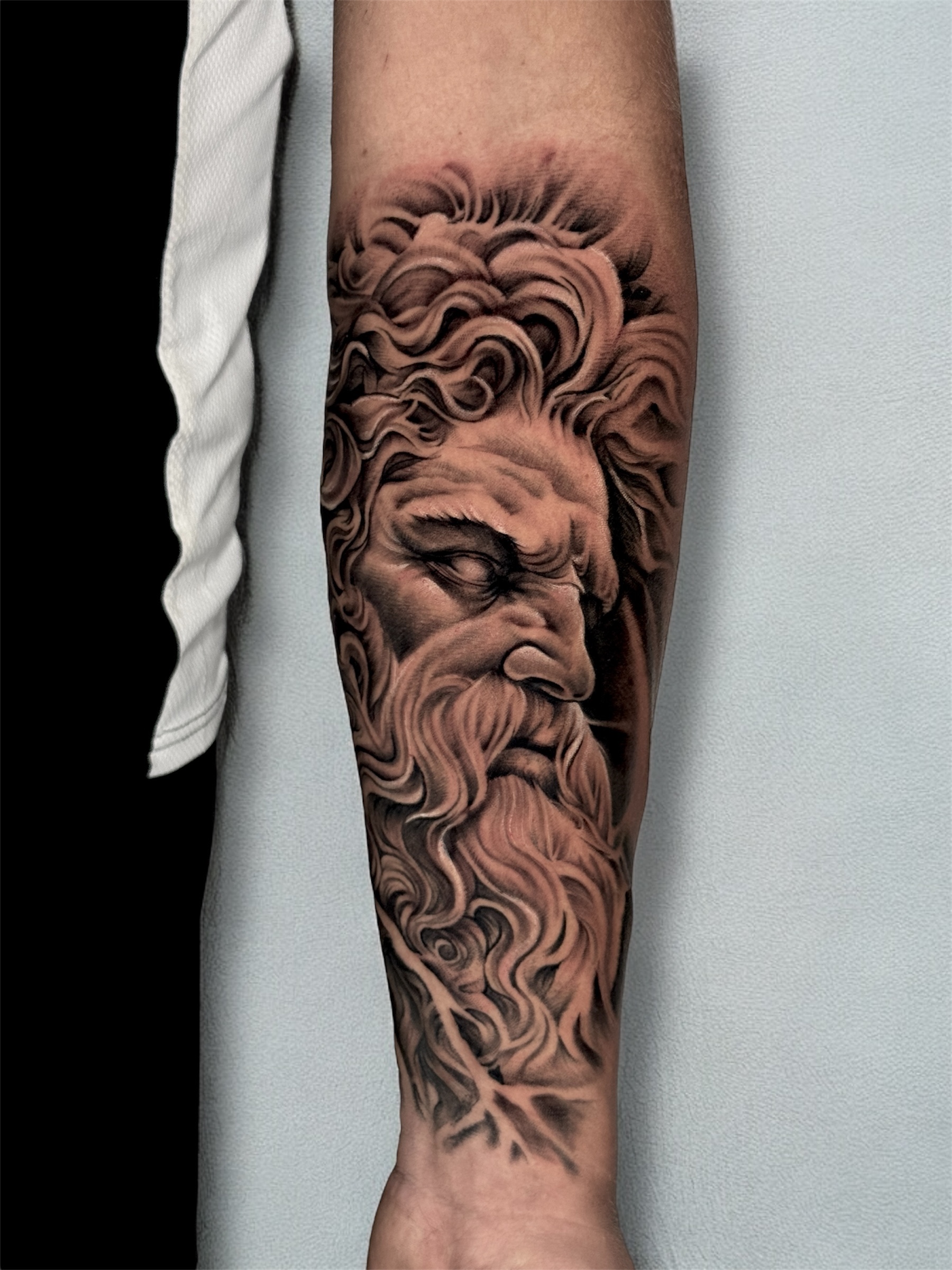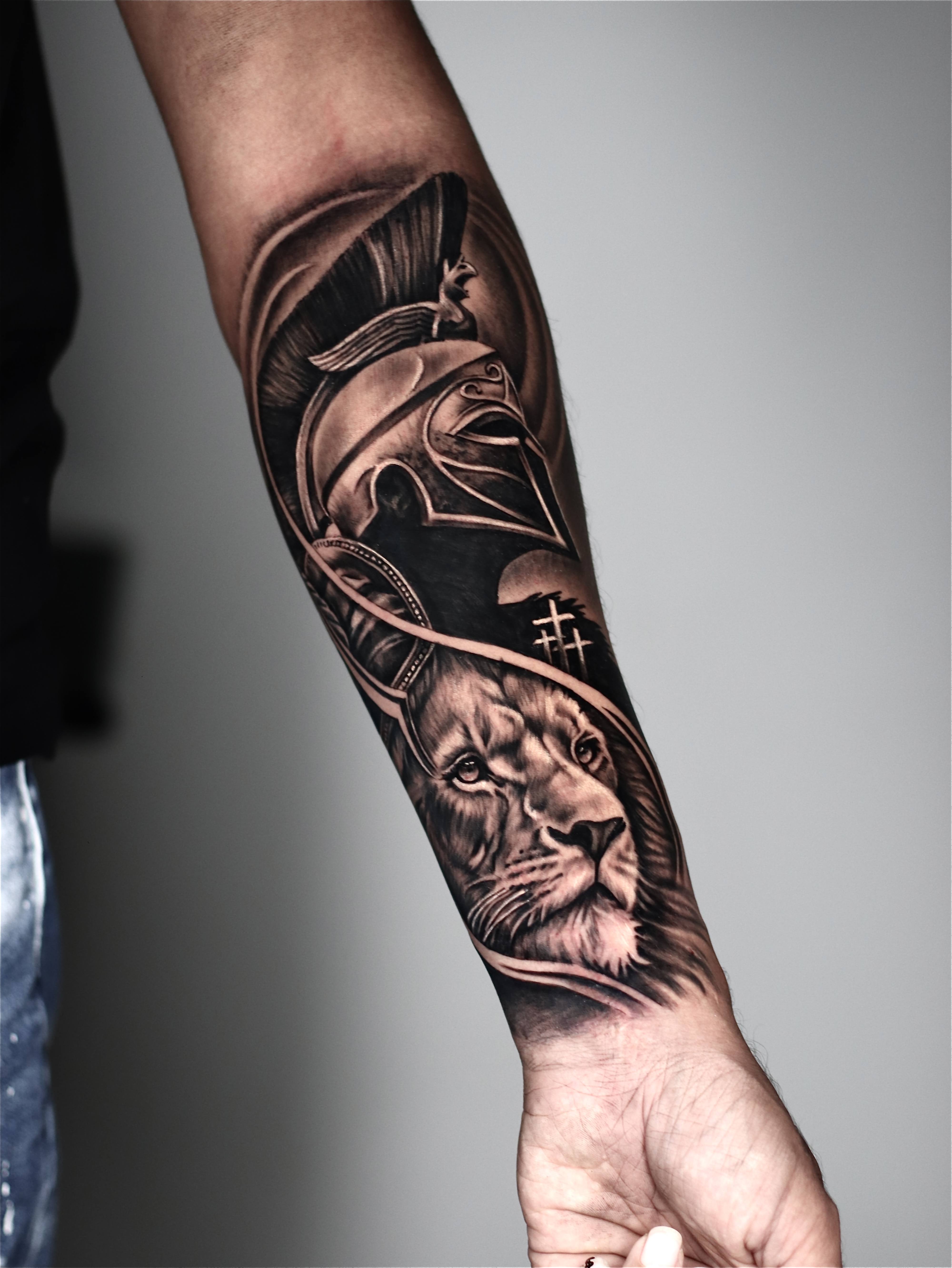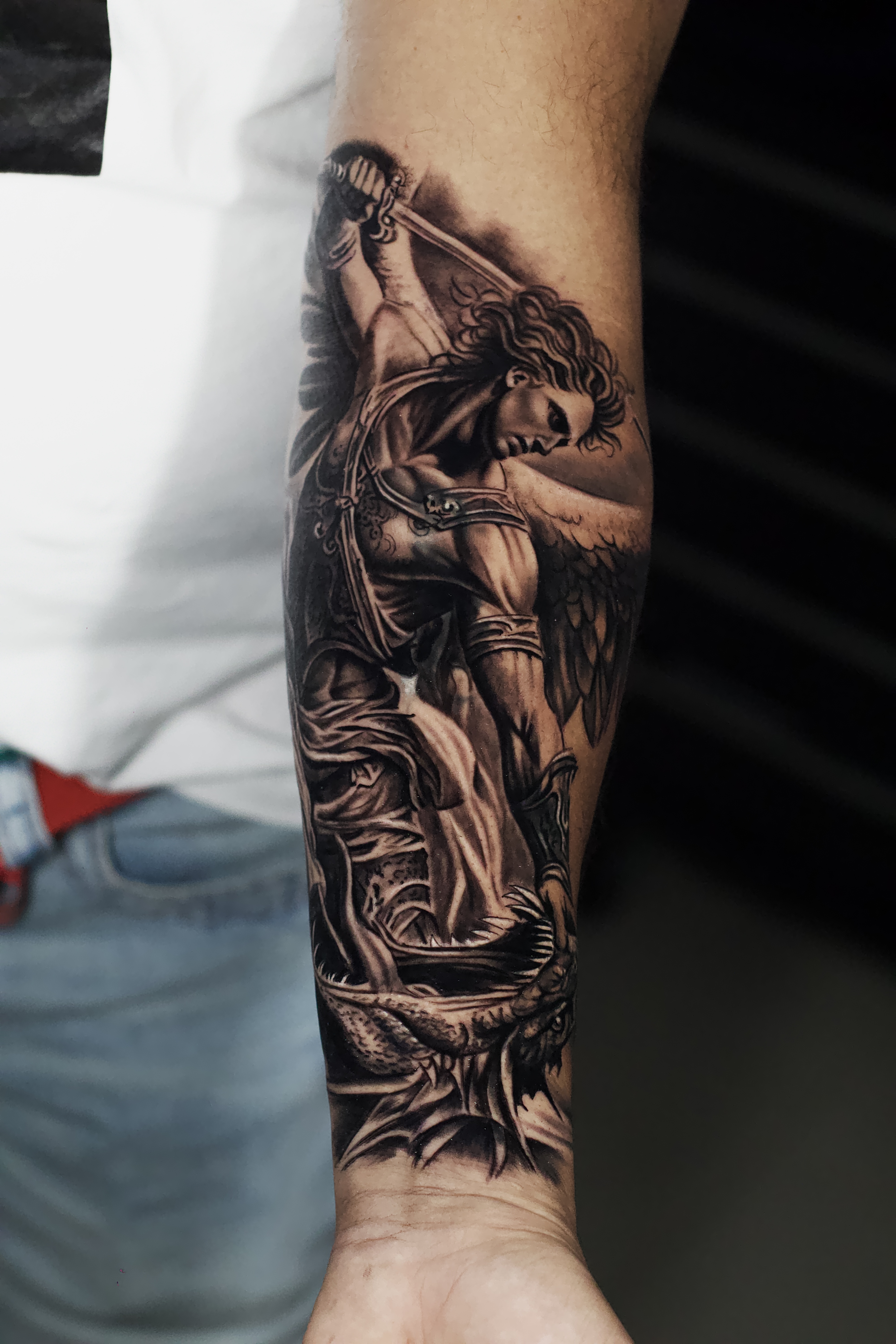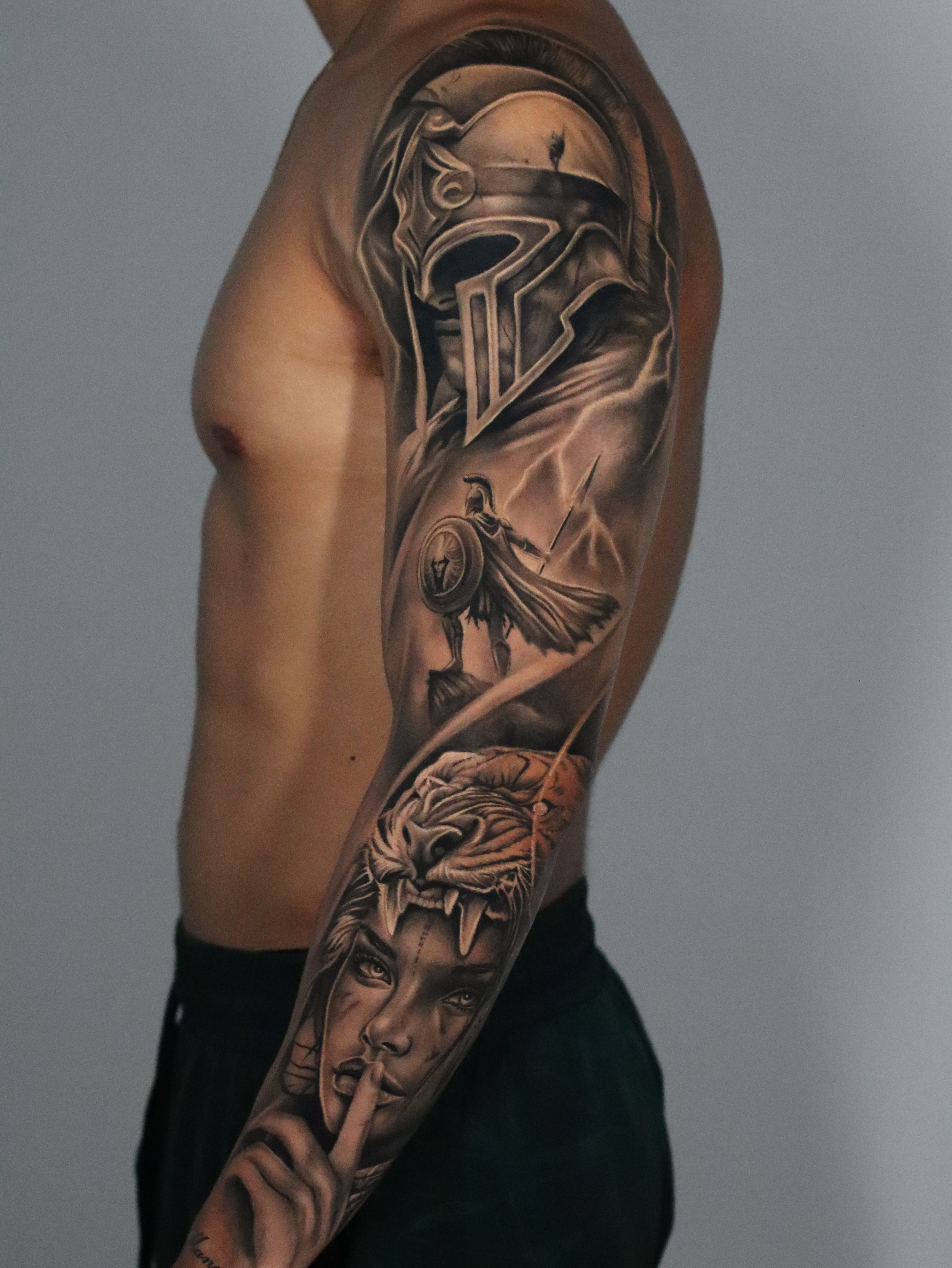
If you have a tattoo that no longer represents you, that didn't turn out technically well, or that belongs to a chapter of your life you want to close, a cover-up is the most effective solution to reclaim your skin. A well-planned cover-up doesn't just hide what you want to conceal — it transforms it into a piece of art you could proudly show. At Legassy Studio we've completed dozens of complex cover-ups, and in this guide we explain everything you need to know before booking your appointment.
The first question almost everyone asks is the same: Can any tattoo be covered? The short answer is yes, almost always, but with important nuances that will determine the final result. Understanding those nuances is the difference between doing the process correctly and ending up with an even harder tattoo to manage.
What is a cover-up and how does it actually work?
A cover-up is a new tattoo strategically designed to cover an existing one. It's not simply tattooing on top: the artist must design a composition that uses, neutralizes, or integrates the previous ink within the new design. The darker, more saturated, and larger the original tattoo, the more limitations the cover-up will have regarding color palette and minimum size of the new design.
The physics of ink under the skin explains all of this. The existing ink doesn't disappear — the new tattoo overlaps it. That means lighter colors in the new design will blend with the darker tones of the previous one, and the result can be unpredictable if the artist doesn't have experience with this type of work. That's why not every tattoo artist should attempt a cover-up: it requires mastery of color, composition, and prior case assessment.
Factors that determine if your tattoo can be covered
Before giving you a quote or starting any process, at Legassy Studio we evaluate four key factors:
- Age of the tattoo: Old tattoos (5+ years) have naturally degraded, the ink has expanded and lightened, which makes coverage much easier. A recent tattoo has more concentrated and dense ink, which complicates the work.
- Darkness and density of the ink: A tattoo with solid black fill is the most difficult to cover. A fine-line tattoo or one with little ink is considerably easier.
- Size of the original design: The cover-up needs to be between 1.5x and 3x larger than the tattoo to be covered, depending on the case. This is non-negotiable from a technical standpoint.
- Body area: Areas with thicker skin and less movement (back, thighs, arms) allow better results than areas of high mobility or friction.
Styles that work best for cover-ups
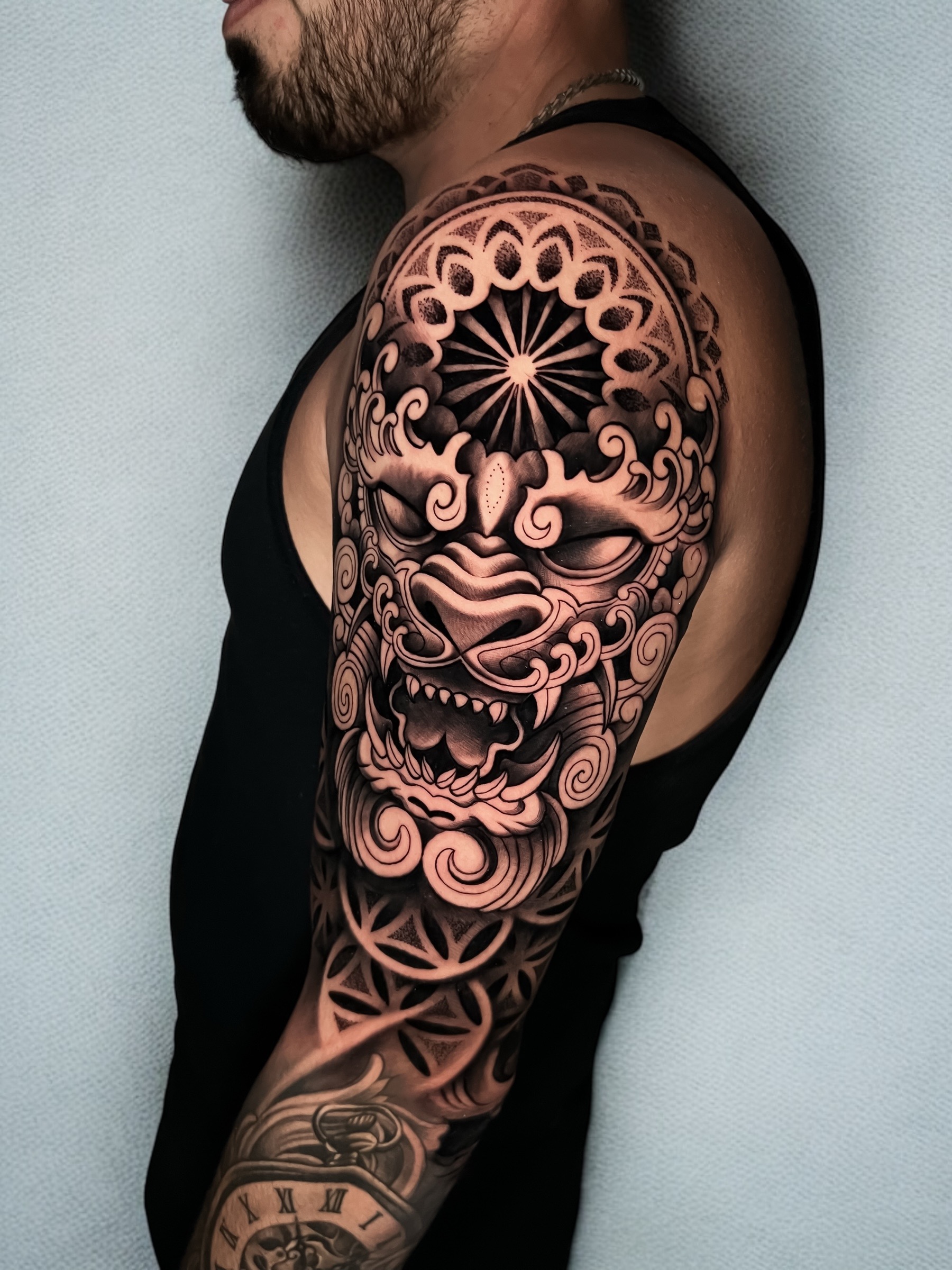
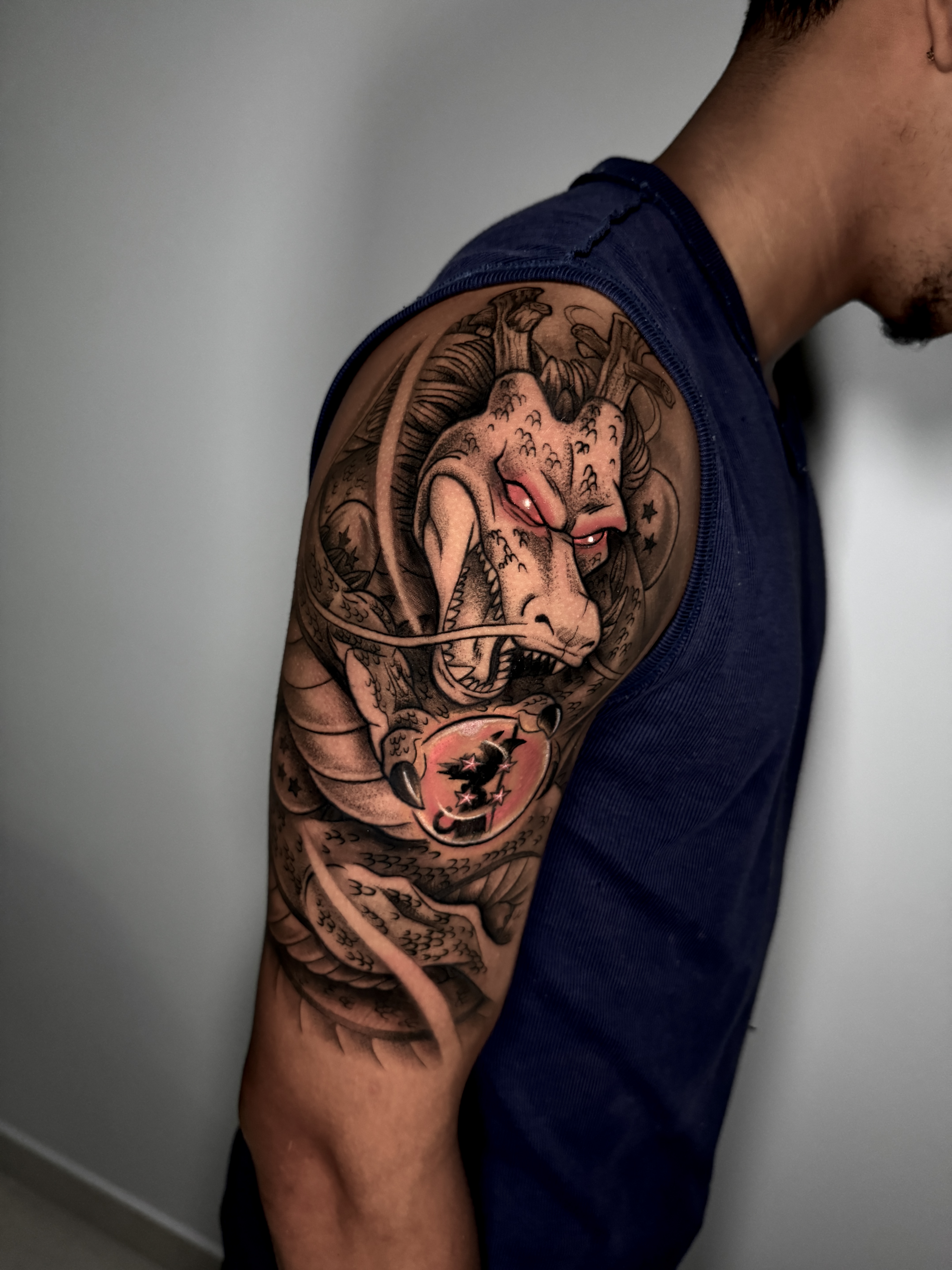
Not all styles are equally effective for covering tattoos. Black & grey realism, blackwork, and neo-traditional style are the three that generate the best results in coverage. Black & grey realism is particularly powerful because it uses black ink at different densities to create deep shadows that naturally absorb and neutralize what lies beneath.
Blackwork — solid black fills — works for extreme cases where the original ink is so dense that the only resource is to cover it with compact black. Some clients use this for tribal or geometric style pieces that leverage black as a primary aesthetic element.
Conversely, styles that typically don't work well for cover-ups are watercolor, delicate fine line, and designs with a lot of white space: all these techniques depend on the cleanness of the skin background to shine, and that cleanness doesn't exist when there's previous ink.
The process at Legassy Studio step by step
Our cover-up process always begins with an in-person evaluation or high-quality photograph assessment. We ask you to send us photos of the tattoo with good natural lighting from different angles. With that information, the assigned artist evaluates feasibility, offers you style and dimension options, and delivers a fixed quote.
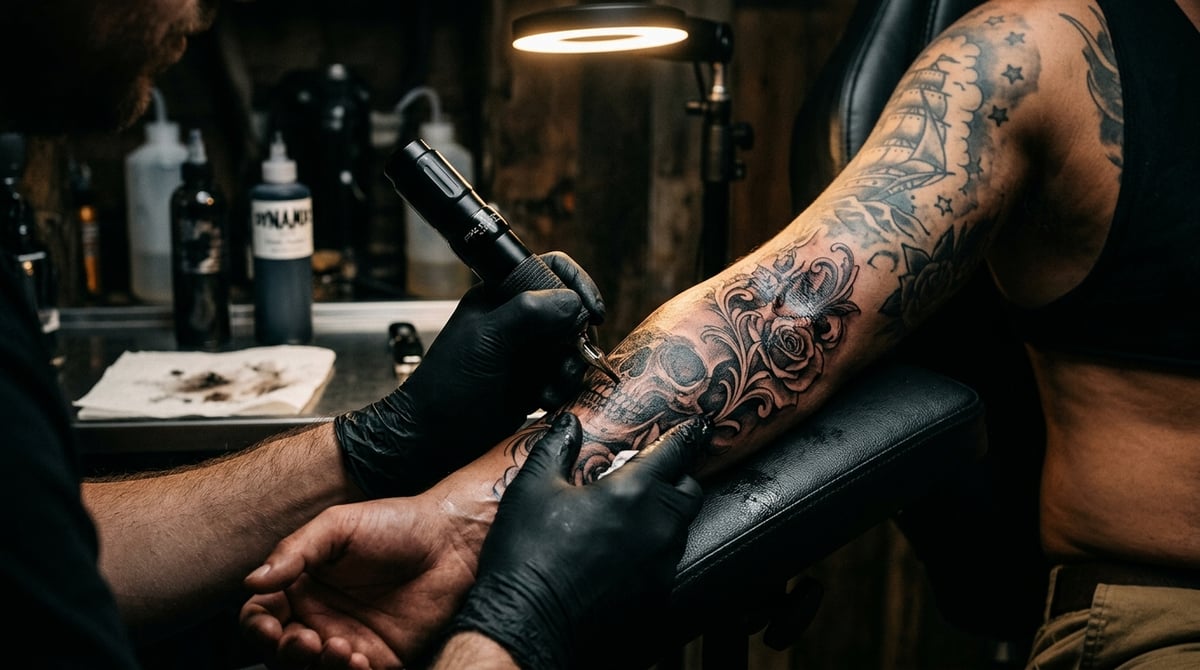
Once the design is approved, the session is scheduled. Depending on complexity, a cover-up may require a single long session or several sessions separated by the necessary healing time. The artist works the design so that the darker elements of the new tattoo are strategically positioned over the areas of highest ink density from the previous one.
After the session, the aftercare process is identical to any new tattoo. However, it's important to know that in some cases, especially when the original ink is very dense, some of the previous piece may appear during the first healing. This is not a failure: it's part of the process, and is generally corrected in a touch-up session included in the budget.
When does laser clarification before a cover-up make sense?
In cases where the original tattoo is very dark, very large, or in a complicated area, one or several laser sessions before the cover-up can be considered. The laser doesn't need to completely remove the tattoo: lightening the ink between 30% and 60% gives the artist much more room to create a clean, well-defined new design.
This combined approach (laser + cover-up) allows results that would otherwise be impossible, and in many cases it's the only way to achieve the desired result without compromising the new design. At Legassy Studio we can advise you on whether your specific case would benefit from this approach.
Frequently asked questions about cover-ups
Does a cover-up hurt more than a regular tattoo? Not necessarily. Pain level depends on the area and session time, not on whether it's a cover-up or not. However, sessions tend to be longer, which may make the area more sensitive toward the end.
How much more expensive is a cover-up? Generally between 20% and 40% more than an equivalent tattoo from scratch, depending on the complexity of the coverage. The evaluation, strategic design, and technical execution work it requires justifies that difference.
Can I completely change styles? Yes, and in fact many clients take advantage of the cover-up to migrate from a simple-line youth tattoo to an elaborate realism piece. The artist adapts the new design to the possibilities offered by the existing ink.
If you have a tattoo you want to transform, the first step is to send us a photograph so we can evaluate it with no commitment. At Legassy Studio we approach every cover-up as what it truly is: a second chance to have the tattoo you really wanted from the beginning.