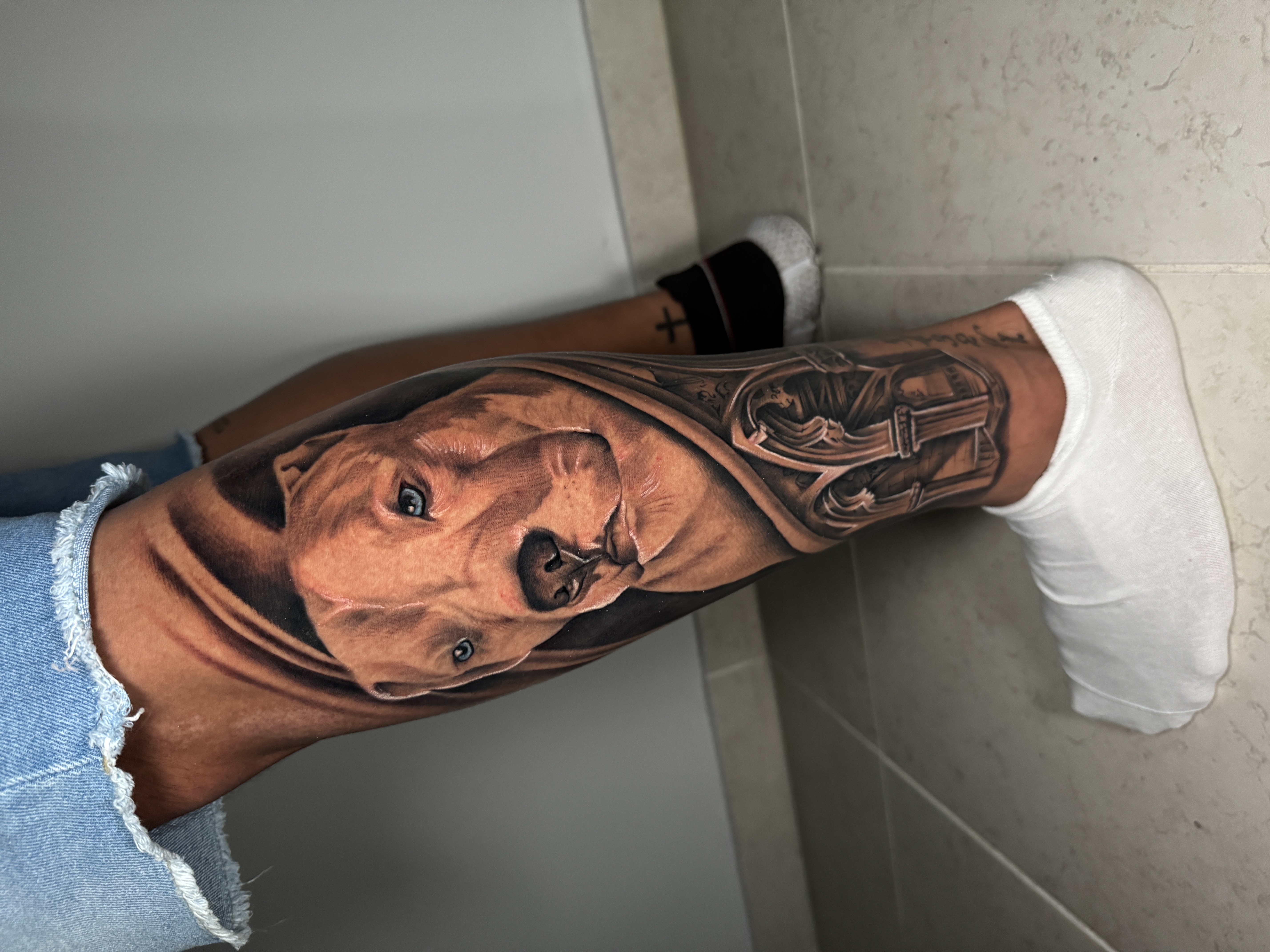
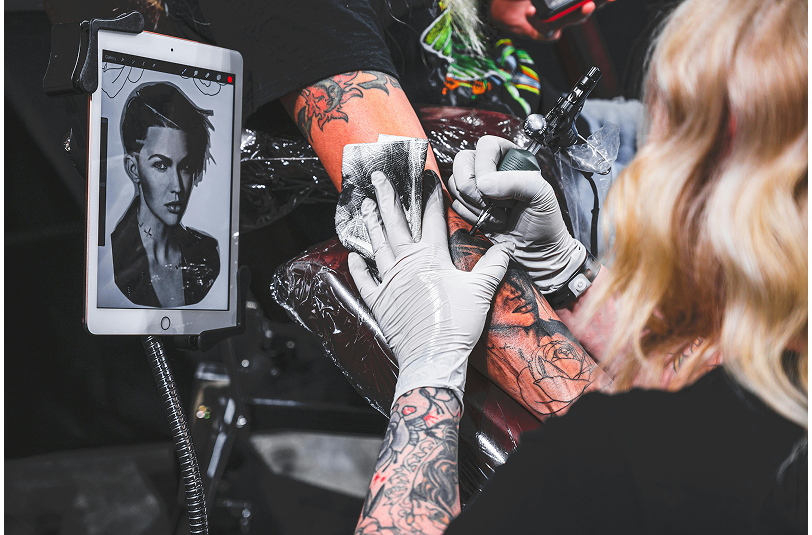
A tattoo touch-up is needed when patches lack ink after healing, or when over the years lines spread and contrast fades. Wait at least 4 to 6 weeks after the session to assess it. Hands, fingers, feet and fine line need it most often. At Legassy Studio, healing-related touch-ups are included.
All tattoos change over time. It's inevitable: ink migrates, skin ages, and the sun does its work. But there's an enormous difference between a tattoo that has aged gracefully and one that simply needs a touch-up to recover its original impact. A well-executed touch-up can transform a dull piece into a work that looks freshly done, and in many cases it's a much smaller investment than starting from scratch.
The problem is that many clients don't know when the right time to return is, how long to wait after the original session, or whether what they see on their skin is normal or a problem requiring attention. In this article we resolve all those doubts.
What is a touch-up and how does it differ from a new tattoo?
A touch-up is an additional session performed on an existing tattoo with the goal of correcting, reinforcing, or updating some element of the original design. It's not a new tattoo: it's a precision surgical intervention working over ink already deposited in the skin.
The most common touch-ups address:
- Areas where ink was lost during healing: It's normal that during the first healing some areas retain less ink than others, especially in high-friction zones or folds.
- Lines that have opened or expanded: Over time, very fine lines can widen or lose definition. The touch-up reconstructs them.
- Colors that have lost saturation: Color always loses some vibrancy over the years, especially if the tattoo has had frequent sun exposure.
- Shadow areas that have lightened: In black & grey realism, medium grays tend to lighten more than deep blacks. A touch-up can restore contrast.
When should you get a touch-up?
This is the most important question, and the answer has two dimensions: the minimum waiting time and the signs indicating a touch-up is already necessary.
Minimum waiting time: You should never return to touch up a tattoo before it has healed completely. Complete skin healing takes between 3 and 6 months, even though the surface may appear healed after 2–3 weeks. Returning before that time can damage the skin and compromise the touch-up result. The recommended waiting time is at least 3 months from the original session, and many artists prefer 4 to 6 months to ensure the process is completely finished.
Signs your tattoo needs a touch-up:
- There are areas where ink is clearly missing or color is noticeably lighter than the rest.
- Lines look broken, inconsistent, or have lost definition.
- The contrast between deepest black and the grays has significantly diminished.
- Color looks dull or yellowish (especially in color tattoos).
- Some areas look blurry or have migrated to the sides.
Which tattoos need touch-ups most frequently?
Not all tattoos have the same shelf life without touch-ups. Some styles and areas require more frequent attention:
- Hand, finger, and foot tattoos: These need touch-up fastest due to the high level of friction and cellular regeneration in those areas. In some cases, a finger tattoo may need touch-up after just 6–12 months.
- Very delicate fine-line tattoos: Ultra-fine lines (less than 0.5mm thick) tend to open over time and may need reinforcement every 2–3 years.
- Bright color tattoos: Yellows, whites, and pinks are the colors that lose saturation fastest and usually need touch-up before blacks and blues.
- Tattoos frequently exposed to sun: Without daily sun protection, any tattoo loses definition faster, regardless of style.