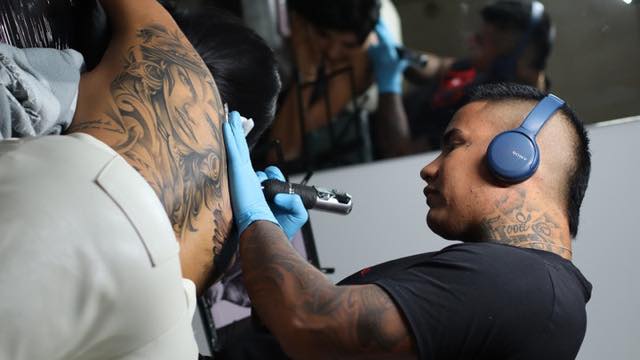
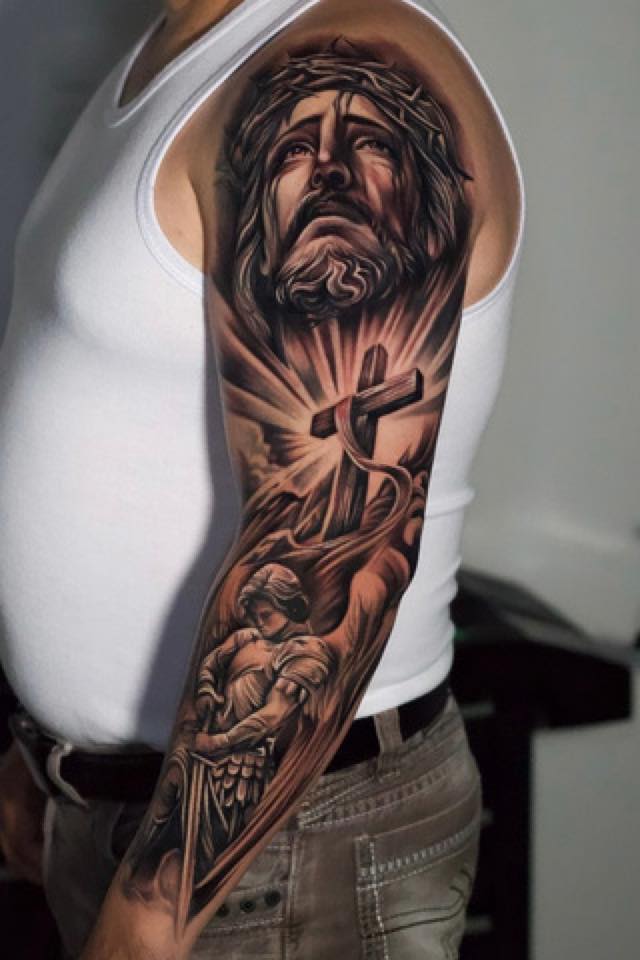
An online course works for theory and drawing, and it is flexible and affordable. An in-person course lets you learn what a screen cannot show: hand pressure, skin stretching and real-skin practice with on-the-spot correction. If you want to tattoo professionally, the practical part must be in person and supervised.
“Online tattoo course” is one of the fastest-growing searches. It makes sense: it is convenient and accessible. But not everything in tattooing can be learned remotely. This comparison will help you decide.
Online vs. in person: comparison
| Online | In person | |
|---|---|---|
| Schedule flexibility | High | Medium |
| Theory, drawing and design | Good | Good |
| Live correction of your hand | Limited | Immediate |
| Real-skin practice | No (or unsupervised) | Yes, supervised |
| Biosafety in a real setting | Theoretical | Hands-on, in a studio |
| Exposure to daily studio work | Low | High |
What can’t be learned through a screen
- Depth and pressure: the difference between a clean line and damaged skin is millimeters.
- Skin stretching: every area of the body behaves differently.
- Reading the client: pain, breaks, swelling and when to stop.
- A real studio’s pace: setup, cleaning, timing and client care.
A video shows you how it’s done; only someone beside you can tell you if you’re doing it right.
What about one-on-one training?
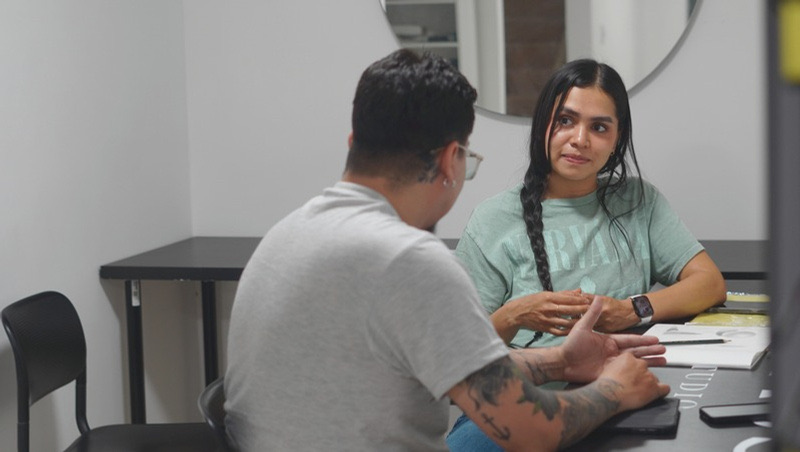
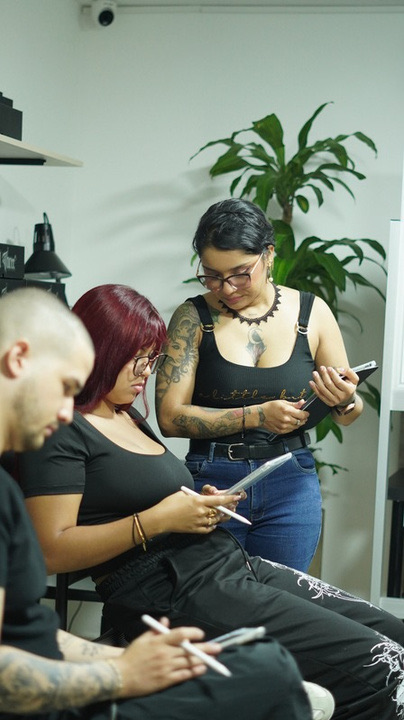
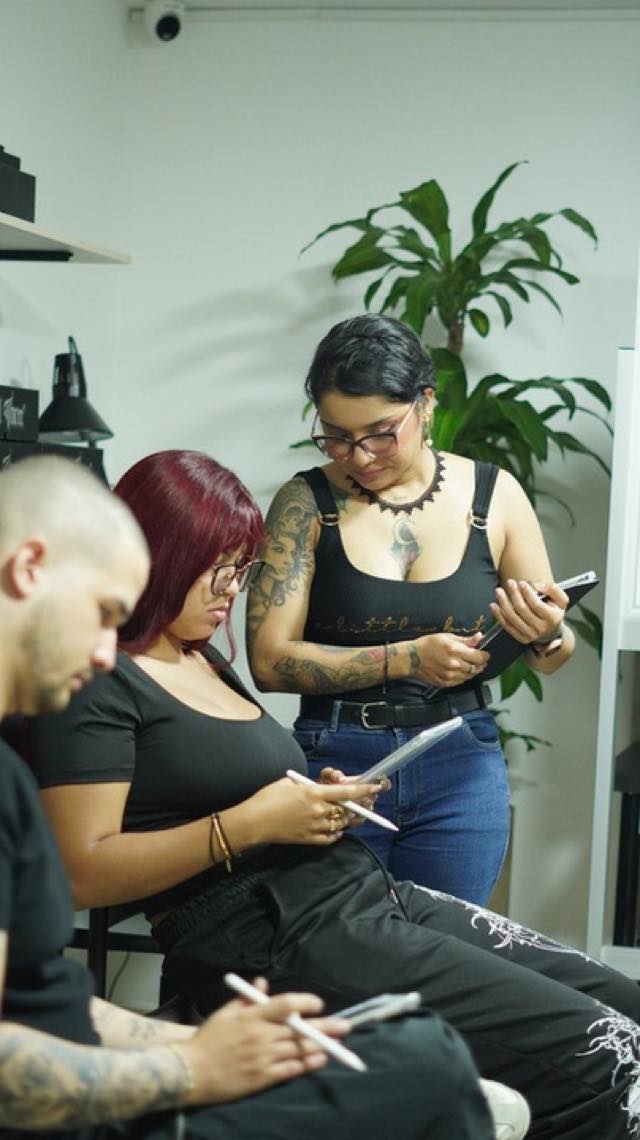
Within in-person courses there is an important difference: being one of 30 students in a room is not the same as working one-on-one with an artist. In a personalized format every correction is for you and you move at your own pace.