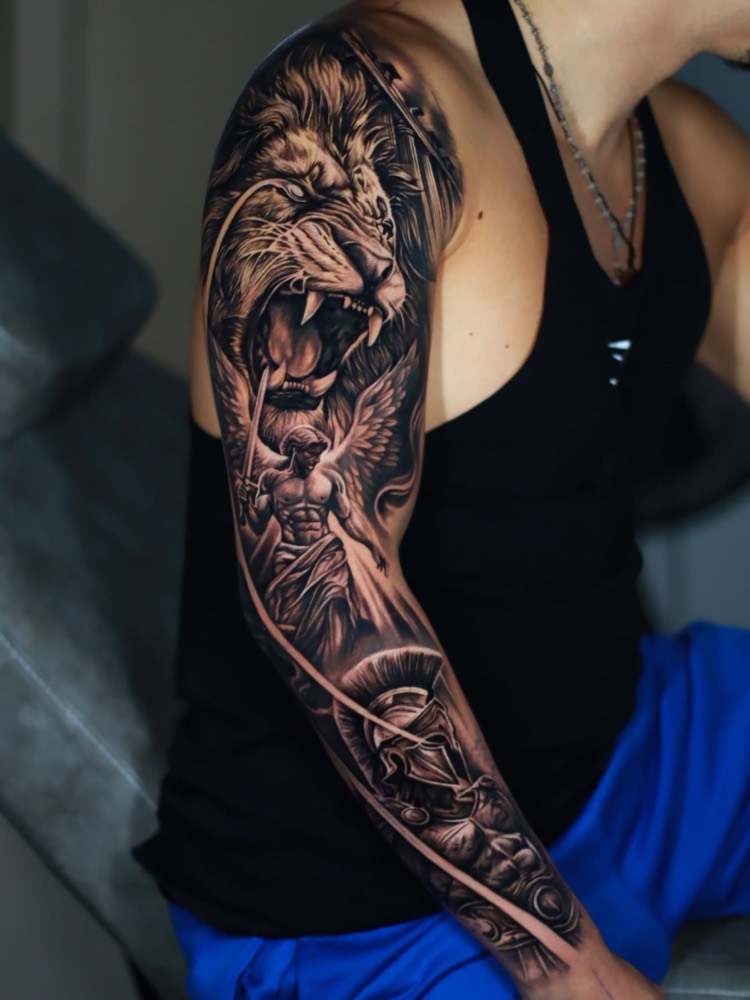
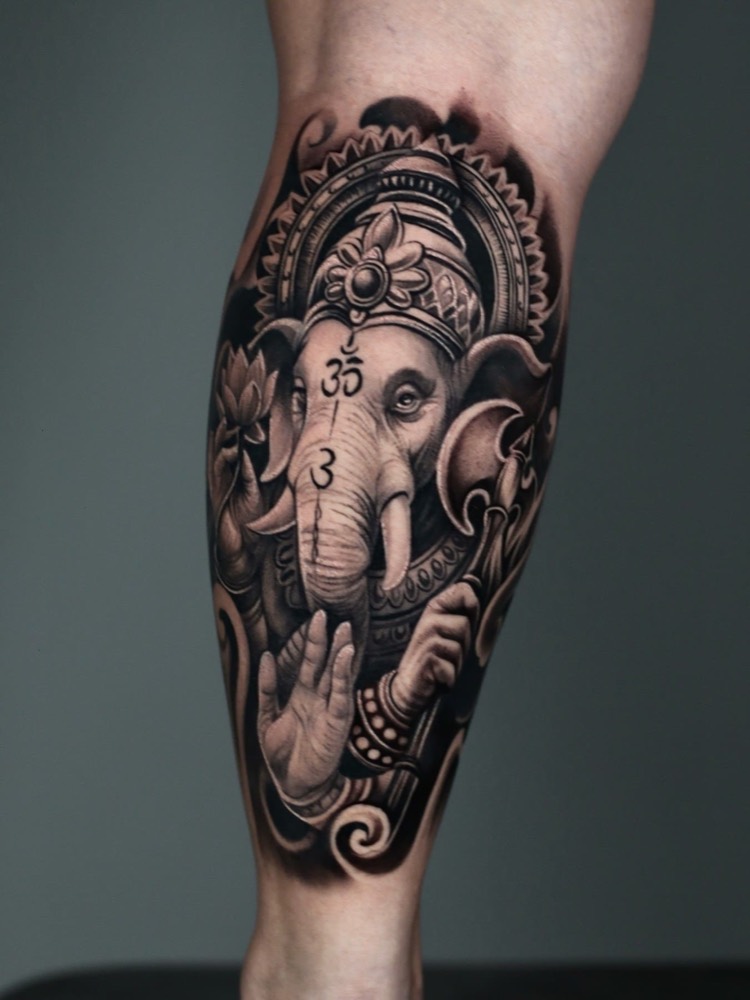
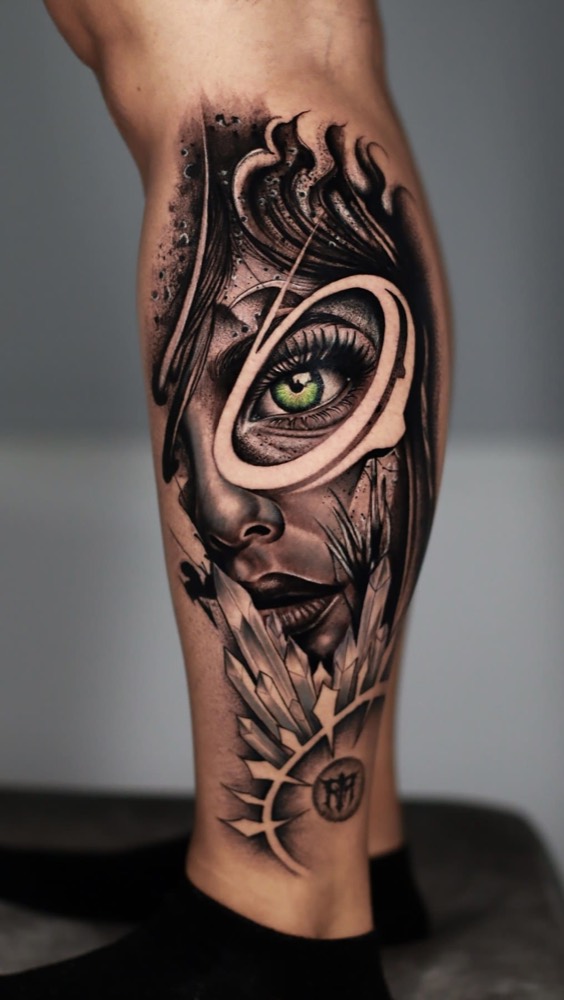
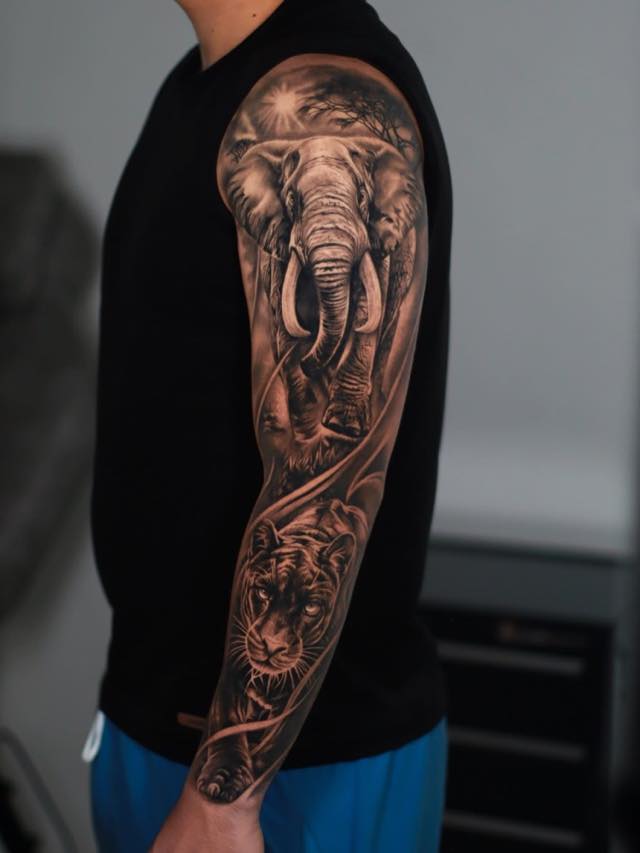
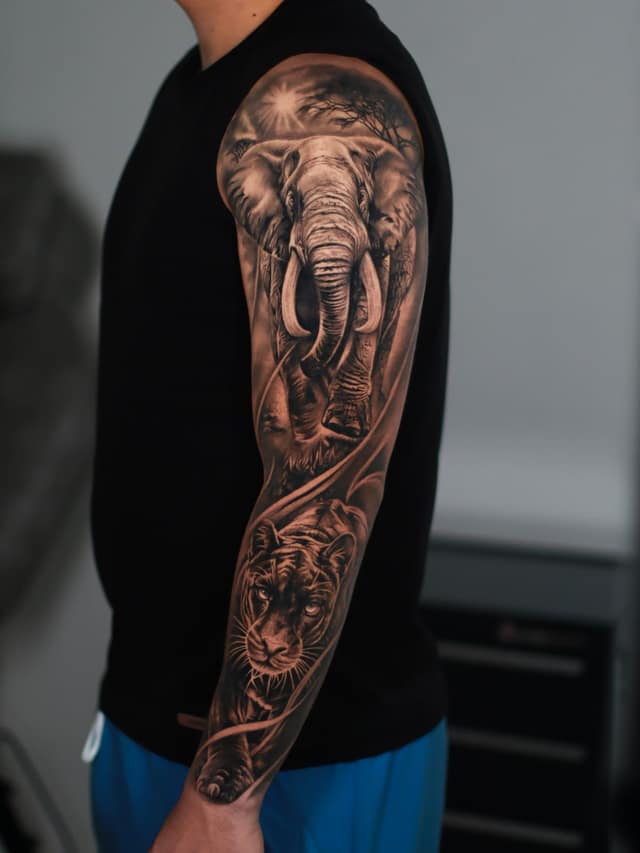
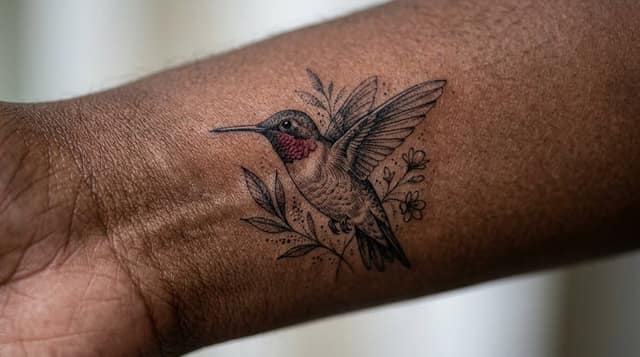
A realism tattoo aims to look like a photograph on the skin: smooth shading, volume and a lot of detail. At Legassy Studio in Cali we mostly work black & grey realism: animals, portraits, mythological and religious figures. Because of the level of detail, a realistic piece usually needs enough size, one or more long sessions and good care while healing. The consultation is free on WhatsApp.
If you are looking for a realism tattoo artist in Cali, this guide helps you understand what makes a realistic piece work, what to expect from the process and what to ask before starting.
What exactly is realism in tattooing?
Realism reproduces an image with volume and depth, as if it were a photo or a painting. Unlike bold-line styles, almost everything here is built with gradients: going from the deepest black to very light greys without hard edges. That is why it is one of the most demanding styles and where the artist’s experience shows the most.
- Black & grey: uses only shades of black and grey. It is the most common and ages best.
- Realism with touches of color: for example, a colored eye inside a grey piece. You can see one in the gallery below.
To understand the difference with other dark styles, read our guide on blackwork vs. realism.
How many sessions does a realism tattoo need?
It depends on size and level of detail. As a reference:
| Type of piece | What it usually involves |
|---|---|
| Medium piece (calf, forearm) | One long session or two, depending on the shading. |
| Full sleeve | Several sessions planned as a single project. |
| Full back | A long project in stages, letting the skin heal between sessions. |
The artist will give you a specific estimate during the consultation. You can also read how long a session lasts depending on the design.
Which placements work best for realism
Realism needs space for the detail to breathe. If it is done too small, the greys move closer together over the years and the image loses definition. The most common placements are:
- Arm and forearm: wide surface and easy to show.
- Calf: ideal for vertical pieces like the Ganesha in our portfolio.
- Back and chest: for large projects with several figures.